Shoshana
Shoshana
Don’t miss out on your life
Facing the prospect of getting intensive treatment for anorexia in a residential program—where she would be supervised around the clock—petrified Shoshana.
I was terrified of the lack of control—like someone taking away something that I thought was helping me.
Shoshana came to realize that treatment wasn’t optional—it was her lifeline. With care, she saw a future full of possibilities. Without it, she knew her life could take a very different, far darker turn.
From there, Shoshana’s resilience came through. She transitioned from residential care to a day program, determined to keep moving forward. Step by step, she confronted her eating disorder while also finding strength to heal in other areas of her mental health.
I was then diagnosed with borderline personality disorder (BPD) at 20. This couldn’t happen until after the eating disorder piece calmed down.
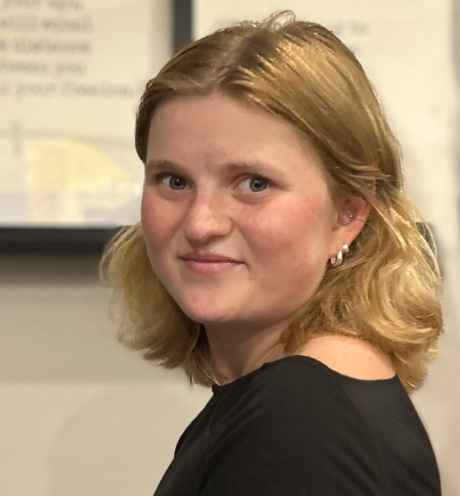
Her family’s support and her freshly developed faith in treatment played a role in her next steps. When she found a specialized program for BPD—even though it wasn’t local—Shoshana didn’t hesitate. She packed up her life, moved to a new state, and threw herself into therapy. Her courage and commitment gave her the tools to better manage her symptoms and keep building her recovery.
She now lives in a transitional living setting and supports community members who have their own mental health experiences.
Reflecting on her progress and recovery, she takes pride in her ability to support those who are in the beginning stages of their treatment journeys. Her lived experiences act as testimony and provide inspiration to those around her.
Depend on your values and the people and things that you love. You’re missing out on your life. Treatment may not be for yourself at first, but eventually it will be.
Beyond her work with others in transitional living, Shoshana takes classes to continue her education that was once put on pause. She hopes to become a social worker and would like to work with youth who are struggling with eating disorders.
She believes so strongly in eating disorder recovery and extends this hope into other areas of her mental health.
I do this work for myself because I never thought that my life could be what it is now. Doing this work is showing me that I can be proud of being in recovery and proud to share my story.