Aza
Aza
You must define who you are
To discover who you truly are, you must define who you are and more importantly, who you are not.
Now a fierce mental health and recovery reform advocate, Aza’s journey to find a sense of identity and belonging began in childhood.
I was never told to just be myself growing up. I always felt that I had to be someone that I wasn’t. There was this never-ending emptiness inside me, and I truly felt like I just didn’t fit in anywhere.
When she was a teenager, she recognized signs that she struggled with her mental health.
Looking back, I can see there was a significant change in me when I went to college. I was always angry, with zero self-worth and had no idea who I was.
Though I was smart, ignorance was my best friend.
During and after college, Aza struggled with depression, anger, low self-worth, anxiety, and suicidal ideation. She went to see a counselor on campus who told her she was “just depressed,” and when she shared her struggle with disordered eating, she was told, “Black girls don’t do that.”
The losses of her close cousins and twin sister exacerbated her feelings of distress. At its worst, her mental health struggles felt like a hurricane, and at its best, a cloudy day at the beach waiting for the storm that would inevitably come.
After an extensive psychiatric evaluation, she was diagnosed with borderline personality disorder (BPD), which is often characterized by a fear of abandonment, emotion dysregulation, identity confusion, relationship difficulties, and suicidal ideation.
Aza recognized right away that this aligned with the symptoms she experienced.
It was a relief, to understand and put a name to what I was dealing with. But it was also disheartening because I was encouraged to keep the diagnosis to myself, and I didn’t want to keep it to myself.
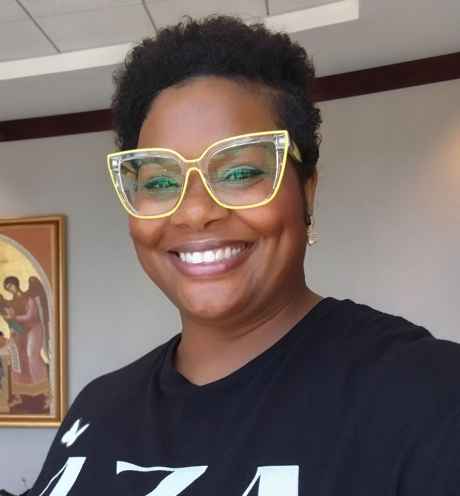
Aza’s experience with stigma made finding treatment and support challenging. Her journey toward recovery was met with a gut-wrenching experience that fueled her advocacy.
I started attending a recovery program in 2023. For the first time in my life, I was actually starting to get better.
However, Aza left the treatment program after experiencing abuse, left feeling shattered without her much-needed recovery community. When she tried to speak up about the abuse, her diagnosis was used as an excuse to invalidate her concerns.
I noticed that there were so many things wrong with the program, as well as the system of recovery itself. When it came to abuse and exploitation in recovery, people were conditioned to recover in silence. I knew that a major change was needed.
Aza wants to show others that they can surpass mental health stigma and reach self-acceptance by prioritizing their own autonomy.
Your authenticity has the power to set someone free and that someone starts with yourself. I think that to live authentically means to always be a student of life, consistently learning to master being yourself.
She created a recovery focused program and has become a powerhouse for mental health and recovery reform.
I want people to be in a position where they can be their authentic selves without fear. I often find people need space to get their stories out in raw form like they never have before. They don’t have to keep carrying what they’ve been hiding for so long.
A glowing butterfly in the dark has no idea how far it can fly or how bright it shines, but others lost in the dark can see the glow as clear as the sun rises.
When Aza came out of recovery, she felt like that butterfly—transformed, yet still in the dark. She turned that feeling into the logo for her company. She notes that as beautiful as they are, butterflies cannot see their own wings.
It took me a while to realize how far I’ve come. Since darkness cannot survive where the light shines, I became the light.