Noam
Noam
Even when things are good, it is still a struggle
Noam, the middle child in her family, faced unrecognized mental health difficulties from an early age.
I’ve been struggling with mental wellness since I was four. Since then, I’ve been getting feedback from the community that I don’t have a ‘real’ mental problem. Everyone thought my problem was that I am sensitive. They didn’t think it was anything serious.
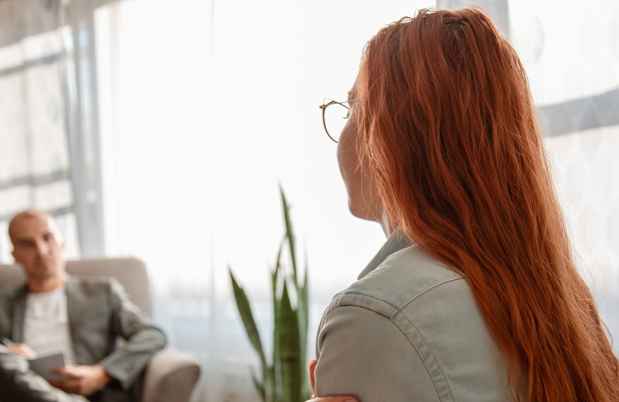
As a child she underwent therapy, mainly with counselors and child psychologists, but she did not feel that her condition was taken seriously. This feeling led her to avoid mental health care and refuse to accept help for many years.
I kept getting messages that I didn’t really have a disease or a condition that required real treatment, so I stopped believing there was any point in asking for help. It felt like I was broken and there was no way to fix it.
It wasn’t until she was 27 that Noam was diagnosed with borderline personality disorder (BPD). She felt relieved, as she was now able to understand herself, her patterns of communication with people, and her mindset over the years.
“Even when things are good, it is still a struggle. It’s a struggle to stay in a good position, and a struggle to see that what comes easily to others is difficult for me.”
Noam is now able to understand how—despite warning signs that included a number of suicide attempts, self-harm, unhealthy relationships, and eating disorders—her parents did not recognize the seriousness of her condition.
I’ve always been a functioning person, no matter how hard it was for me. I was in school, and I was even successful in school, but it was very difficult. I’d come home crying sometimes, or I would run away from classes, but eventually there was a diploma at the end of the year and good feedback from the teachers. So as far as my parents were concerned, I was just sensitive.
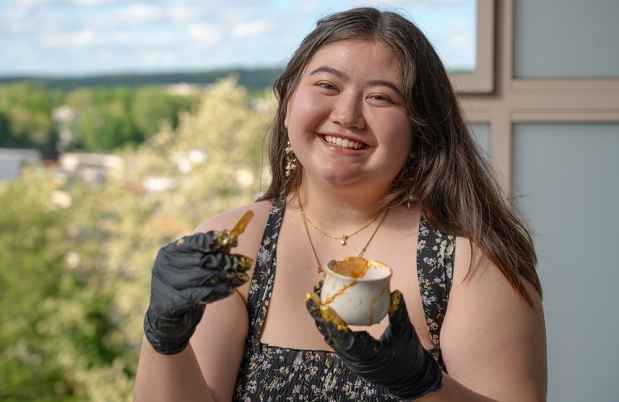
Today, Noam lives in Afula, Israel in her own apartment with a cat, has earned a degree, and works in a program that advocates for accessibility and encourages people with mental health issues to exercise their rights. Noam’s relationship with her family is very good and she relies on them for a lot of support to cope with daily life.
My family is now more understanding of what I’m going through. I’ve learned to ask them for help, and they’ve realized how it can be done.
It is important to Noam to send a message to the community, and also to remember herself, that the way she lives her life does not mean that she does not have mental health challenges.
Just because I’m able to do things isn’t proof that I don’t have mental health issues. Even when things are good, it is still a struggle. It’s a struggle to stay in a good position, and a struggle to see that what comes easily to others is difficult for me.
Noam’s story is also available in Hebrew