Melinda
Melinda
There are people who are ready to talk about mental health
Don’t bring your personal baggage to work, but also don’t take time off to see a professional.
If you have problems, self-medicate with drugs and alcohol like everyone else. Don’t show any signs of weakness, or you’ll be replaced.
Those are some of the unwritten rules Melinda has had to live by while working in the restaurant industry.
For many years, she experienced mental health symptoms, but peer pressure at work and a lack of formal support services made it nearly impossible for her to address her concerns.
Looking back, Melinda realizes that signs of future trouble were there even before she began her culinary career.
In my teens, I struggled with disordered eating. It was the early 1990s, and though there were after-school specials on anorexia and bulimia, I didn’t receive attention for my condition because I looked healthy.
This faded into the background as other issues surfaced in my 20s.
“I’m a vocal advocate for peer-led mental health and substance use services in restaurants now.
I know stigma in the restaurant community is strong, but I trust that recovery is stronger.”

Melinda had her first debilitating panic attack while working in a restaurant in 1999.
I was taken by ambulance to a hospital after collapsing while cooking on the line during a busy lunch service at a seasonal resort.
I was scared, alone, and I thought I was dying. Even still, I almost refused to be taken to the hospital because I didn’t have health insurance.
There, they examined me, gave me some medication, and told me I’d had a panic attack. They suggested I seek professional help for coping with anxiety, but I didn’t because I couldn’t afford it.
Sliding-scale, community-based resources weren’t available to me back then.
As she continued to work in restaurants, Melinda hid and denied her anxiety.
Most people don’t know about the parallels between the military brigade system and culinary arts, but to those on the inside, the rules are clear.
Discussion of mental health was and still is discouraged. Don’t ask and don’t talk about mental health is very much the norm.
Melinda had no energy to do anything but work, but she also couldn’t sleep. Her body held pain in weird places, and her disordered eating came to the forefront again.
She wasn’t being transparent with anyone about her alcohol consumption.
Then, her doctor told her something that Melinda wasn’t ready to accept—that her body was expressing the signs of untreated depression.
I was given a prescription and told to follow up with a mental health provider, but once again, I didn’t.
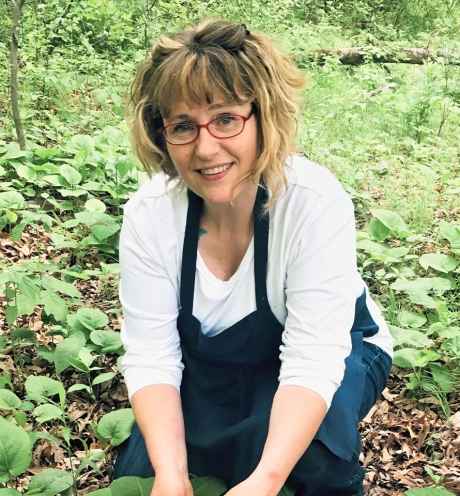
In 2016, Melinda went back to college, and her school offered free mental health services. She started seeing a therapist, and it changed her life.
I’m happy to say that I found recovery from my co-occurring diagnoses with support from therapy, as well as from peer recovery/support specialists and mutual aid groups.
I understand better the link between physical and mental health and that every person has both. I meditate, sleep well, and try to under-schedule activity to prevent burnout, stress, and anxiety.
Drawing on her experiences in the restaurant industry and her history of mental health, Melinda is working for change.
She supports a nonprofit group focused on the hospitality industry called Culinary Hospitality Outreach and Wellness.
I’m a vocal advocate for peer-led mental health and substance use services in restaurants now. I know stigma in the restaurant community is strong, but I trust that recovery is stronger.
Melinda is sharing her story in hopes of encouraging all people with mental health concerns—not just those in the high-stress food service industry—to get help.
You are not alone. There are people who want to talk, people who are ready to talk about mental health.
When you find the right people, it’s like being reborn. Soon, the language to describe your own unique personal experience will follow.
As you learn to develop and use your voice to share your story, more and more people will listen, even those who had previously wished you’d stop talking.