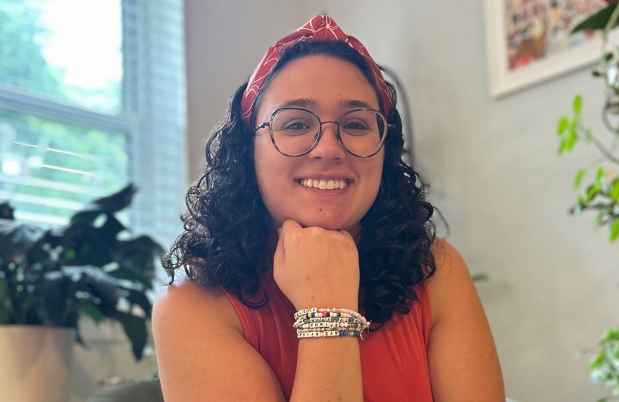
Provider AND Patient: A Doctor’s Mental Health Journey
Available with English captions and subtitles in Spanish.
Lena describes her experience with anxiety and depression during her medical residency—and how she now uses her lived experience to help patients and peers alike.
Turning Struggles Into Thoughtful Care
As a medical resident, Lena faced extreme doubt and anxiety that led her to seek mental health care. Now, as a practicing neurologist, she draws on that experience to deliver person-focused care to her patients.
Watch now to learn more about:
- The factors that led to Lena’s mental health crisis
- Which turning point prompted Lena to seek help
- How Lena applies her experience to delivering patient care
Lena describes how she was starting her medical residency at a large teaching hospital when she began to experience impostor syndrome. She recalls wondering if she belonged in the program and comparing herself to peers more than ever before.
“There was a lot of doubt internally about whether or not I was competent,” she says.
Lena’s feelings quickly spiraled into daily generalized anxiety. Though she realized the severity of her issues, she felt isolated from peers and was afraid to talk about her experiences because of stigma.
She recalls thinking, “If I shared these things, would my colleagues look at me differently? What would happen to me? I had no idea what the consequences of sharing that would be.”
The longer she remained silent, the more her symptoms increased.
Fortunately, a mentor noticed Lena’s struggles and pulled her aside, sharing challenges from her own residency.
The mentor encouraged Lena to seek help from the hospital’s Employee Assistance Program (EAP), where Lena was connected to McLean’s intensive outpatient program and diagnosed with generalized anxiety disorder, obsessive compulsive disorder, and major depressive disorder.
Once Lena completed McLean’s two-week program, she felt empowered to return to work. In the months that followed, as she continued to heal, she wanted to give back. In her second year of residency, a year after she received treatment, she spoke on a mental health panel for the entire residency program about her challenges.
“What ended up really surprising me was that after I spoke on the panel, many of my friends and peers came up to me and told me they were going through almost exactly the same thing as what I was going through.”
Lena eventually formed her own mental health committee as well as an annual mental health panel for the neurology residency. As a physician, she now brings her lived experience into her work with peers and patients alike.
Lena wants those who hear her story to know they’re not alone. She encourages others to seek help.
“No matter how scary it seems to seek help, that’s the first step in addressing the issue, and it could change the course of your life.”
Learn more about Lena’s story
Lena’s Story
As she shares her experiences, Lena answers questions about her mental health journey:
- What challenges did you face when your mental health struggles first began during medical training?
- What specific stress and demands made things difficult during this important time in your career?
- What made you feel like you didn’t belong in the training program?
- How did stress and pressure turn into real mental health problems?
- What stopped you from getting help or talking about your mental health problems openly?
- How did trying to hide these feelings affect how well you could do your job?
- Why did routine tasks like writing patient notes become so hard and take so long?
- When did you realize you might have real mental health problems that needed treatment?
- What physical problems were you struggling with due to psychological stress?
- What went through your mind when you weighed getting care against other options, like leaving the program?
- What specific things did your mentor notice that showed you were struggling?
- How did your mentor use a patient-centered approach to encourage you to get help?
- What happened right after you talked with your mentor?
- How did it feel to take that first step toward getting professional mental health care?
- Can you tell us about going into the intensive outpatient program and what that was like?
- What parts of the treatment felt especially patient-centered to you?
- How would you judge the treatment from a patient-centered care point of view?
- What official diagnoses did you get during treatment?
- How did you feel when you got these specific diagnostic labels?
- What was it like going back to medical training after intensive treatment?
- What felt different about how you handled work and stress after treatment?
- What specific examples show how treatment gave you new ways to cope?
- When did you start thinking about using your experience to help others?
- How did you start doing advocacy work in your training program?
- What was it like talking publicly about mental health challenges for the first time?
- How did your understanding of peer struggles change after sharing your story openly?
- How did the rest of your training go both personally and in terms of your advocacy work?
- What ongoing advocacy work have you done after training, including awareness campaigns?
- How do you think medical training programs have improved at helping trainees with mental health challenges?
- What are the most important lessons you learned about patient-centered care from your own health care journey?
- What examples show what can go wrong when doctors don’t fully understand patient experiences?
- How do you work to avoid bringing unfair assumptions into patient meetings in your current practice?
- Do you see your medical coworkers using similar patient-centered care approaches?
- What real challenges do busy health care workers face in putting patient-centered care into practice?
- How has paying attention to language and communication been important in your experience as both patient and provider?
- What other parts of patient-centered care do you think are essential beyond what we’ve talked about?
- How would you explain holistic approaches to patient care?
- What does curiosity look like when used in real patient interactions?
- What message would you share with current medical trainees who might be having similar mental health challenges?
The information discussed is intended to be educational and should not be used as a substitute for guidance provided by your health care provider. Please consult with your treatment team before making any changes to your care plan.
Resources
You may also find this information useful:
- Lived Experience Storytelling
- Feeling Like a Fraud? A Deep Dive Into Impostor Syndrome
- What’s the Difference Between Mental Health and Mental Illness?
- Understanding the Harm of Mental Health Stigma and How To Push Back
- More Than Sadness: A Deep Dive Into Depression
- Video: Cultural Competency and the Importance of Curiosity
- Video: Building Trust With Patients
- Access the full Mastering Patient-Centered Care 2025 course
About Dr. Liu
Lena Liu, MD, is a neurologist at Boston Medical Center and assistant professor of neurology at Boston University School of Medicine. She is chief editor of the 2025 book “Women’s Neurology.” Dr. Liu is a mental health advocate, sharing her experiences in hopes of helping other health care professionals who may face their own mental health challenges.