Liam
Liam
The strongest thing a person can do is ask for help
At 11pm on a school night, 8-year-old Liam quietly gets out of bed and sneaks down the hall to his parents’ room—not because of a nightmare or a stomachache, but to check if they were still alive.
Just as he had checked on them many nights before, he also followed extensive routines of saying prayers and flicking light switches a certain number of times each night to ensure their safety.
As a teenager, he only wrote in blue pen to avoid failing his next test or assignment. As a young adult, he thought constantly about ways in which his wife might leave him and frequently asked her if she really loved him.
As an adult in his late 30s, it looked like Liam had it all—a successful career as a star reporter for a major city TV news station and a happy family with his wife and kids. Internally, however, he was fighting a lonely mental battle against rampant, unwanted intrusive thoughts he describes as a “storm.”
I was surviving, not thriving.
It wasn’t until he opened up to his wife about these fears and behaviors that she, as a psychologist, suggested what he was going through could be obsessive compulsive disorder (OCD).
OCD is a mental health condition where a person gets stuck in cycles of distressing, unwanted thoughts followed by engaging in a variety of behaviors, known as compulsions, meant to temporarily rid themselves of the discomfort.
Compulsions can look like doing something a “just right” number of times, checking their surroundings, or avoiding triggers altogether.
“Why didn’t you tell me before now?” he remembers his wife asking.
It was a typical male thing; I didn’t want to be seen as weak or vulnerable. I thought there was just something really wrong with me and I was alone in it.
Her reply changed the course of the next few years of his life.
She said, ‘The strongest thing a person can do is ask for help.’
Soon after, he sought out a psychologist and was formally diagnosed with OCD.
It was such a relief, yet also confusing because of the misconceptions: I didn’t need things neat or color-coordinated, so I wondered if I really had OCD. The more I learned, the more I realized I met so many of the criteria.
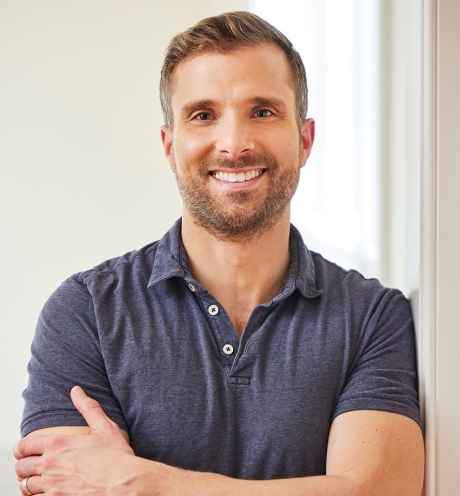
Liam was then faced with a choice—continue living his busy life as a journalist with OCD or take a step away from his career to focus on the fight against it.
He chose the latter and announced his decision to step away from his dream job to focus on his mental health and family on live TV.
I spent most of my life projecting an image of competence, success, and masculinity. I had an opportunity to be honest about what was actually happening with me. I owed it to myself and those watching to be honest.
Shortly after publicly disclosing his OCD and his leave from work, Liam received direct messages on social media from viewers thanking him for speaking out about his diagnosis and sharing their own stories. This feedback motivated him to continue his advocacy efforts in new ways.
He authored a piece in a local magazine about his mental health journey that gained widespread appeal. He even started a podcast encouraging open conversations about experiences with OCD in hopes of breaking the stigma he had to work past himself.
He then began medications along with attending exposure and response prevention (ERP) sessions to build skills to manage his obsessions and compulsions.
ERP is a style of OCD therapy where patients interact with their OCD triggers and practice resisting or modifying compulsions that may come up as a result.
It’s a more compassionate therapy than it gets credit for, but I’m also not going to sugarcoat it. The sessions are difficult.
Through ERP, Liam has learned how to ride the wave of uncomfortable emotions that result from unwanted thoughts.
I don’t know if I’m ever going to have zero bouts of intrusive thoughts, but I can learn to live with them better.
Liam now works as chief marketing officer for a PR firm, giving him more freedom to spend time with his wife and kids, as well as continuing the fight against OCD. He continues to speak about OCD on his podcast and other public forums and encourages others to make the difficult, yet rewarding, choice to reach out for help.
Even if there’s one person who got something from me talking about it, then that would be worth it. For those struggling, you don’t have to tell them everything. Just open the door a bit and you can find it opening more and more.