Tami
Tami
Mental health conditions don’t define who you are
Tami once believed her past trauma disqualified her from helping others heal, but that thought could not have been further from the truth.
From the ages of 4 to 14, Tami endured abuse from a family member. Tami recalls her younger self as “a wild spirit” and “incredibly lost.” In adulthood, Tami experienced anxiety, depression, manic and depressive episodes, and was diagnosed with bipolar II disorder.
In hindsight, she believes that the bipolar diagnosis may have been given, in part, to avoid labeling her with the more heavily stigmatized borderline personality disorder (BPD)—something she was eventually diagnosed with later in life.
After experiencing a decade of childhood trauma, years of instability, uncertainty about her diagnosis, and seeing several different therapists in her 20s and 30s, Tami eventually found healing when she found her current therapist at age 44.
Therapy isn’t one-size-fits-all, and if you don’t click with a therapist, it’s okay to keep looking.
When Tami found her current therapist, she was grieving the death of her mother and recovering from a severe concussion that triggered struggles with alcohol. Tami was not only working on her own mental health, but she was also working toward her master’s degree in counseling.
I was healing myself while I was learning how to help others heal.
Tami always knew she wanted to be a therapist, but for a long time, she believed that her own trauma and mental health struggles made her unfit to help others going through similar situations. Now a practicing therapist, Tami realizes that her own mental health experience helps her pull out strengths in her own patients.
Certified as both a licensed mental health counselor (LMHC) and a national certified counselor (NCC), Tami opened a private practice and has since published her first book through her own publishing company.
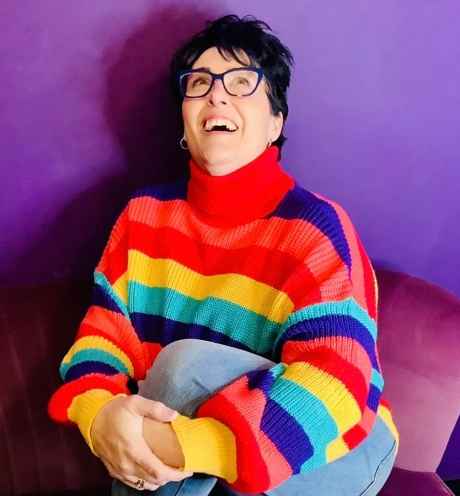
With the stability she’s found through therapy and the fulfillment of living out her calling, Tami now understands that mental health difficulties don’t define her.
BPD has such a stigma, even in our own field. Those of us with these diagnoses and trauma—we have skills that others might not have. We see things differently and we feel things deeply. That can be a gift in therapy.
Tami knew that she had to start enjoying all that life offers and grow from the bad things that happened to her. Tami’s husband, whom she met at 18, is someone who helps Tami be the best version of herself. They have now been together 33 years, married for 29.
I was wild, and he grounded me—but he never tried to change me. He let me be who I was.
Tami also realized that identifying as a victim was not going to help her reclaim her autonomy and happiness. Tami refuses to let the stigma of her abuse story define her. Tami neither identifies as a victim of the abuse she endured nor as a victim of the stigma around abuse. Now, she uses her story as a way to be radically genuine with her patients—allowing them to see her vulnerability in hopes that they will share theirs.
Mental health conditions don’t define who you are or who you can become.
Tami has chosen many other ways to define herself. She is a mother, wife, survivor, clinician, author, business owner, friend, and sister.
My confidence comes from never wanting other people to have control over me again.
Some days, Tami still struggles with impostor syndrome—a feeling of self-doubt despite evidence of competency.
I’ll have a moment where I feel like just a poor, traumatized kid pretending to know what she’s doing. But seeing campaigns like Deconstructing Stigma helped change that perspective.
If other professionals can be open about their mental health, so can I. We don’t have to be perfect to help others. We just have to be real.