Scott
Scott
Life is less linear than I thought
Life is less linear than I thought. If you fall off the tightrope, there’s a net below to catch you.
In his junior year of college, Scott knew something didn’t feel right when homework that should have taken 20 minutes stretched into 4-hour marathons of re-reading. He felt like he needed to have every page memorized to prepare for class the next day.
Time with friends, once filled with joy and laughter, was consumed by thoughts about job interviews and career paths that would not stop circling.
I thought that everyone around me had a path and knew what they wanted to do, but I felt lost and alone. It sparked this existential questioning of what am I doing with my life.
I would ruminate on it and try to figure out an answer that wasn’t there. It was all I could think about and that made me even more anxious.
It wasn’t the first time Scott’s mind had fixated on uncertainty. As a second grader, he began washing his hands compulsively, terrified of germs and confused about why others didn’t seem as scared.
I remember asking my parents, ‘Germs are real, so why isn’t everyone washing their hands like I am?’
After receiving treatment for obsessive compulsive disorder (OCD), he thought he had put these thought patterns behind him. Even so, some anxiety lingered throughout high school and into college.
When he returned home for a school break, his parents noticed a stark change in his mood and behavior. They asked if he was sure he wanted to go back to school, but to Scott, it felt like there was no other option but to return. Within weeks, he realized he truly needed support.
What had initially started as constant anxiety turned into what I now would describe as depression. I felt my mind and body going numb as a way to cope with my discomfort.
Scott decided to enter a dialectical behavior therapy program, despite doubting that it would be helpful. Looking back, Scott sees the program as a turning point in his life. For the first time, he wasn’t alone with his anxiety.
Being in a group setting was eye-opening for me. I think conditions like anxiety and depression can make you feel really isolated and alone. Even though I knew logically that other people struggle too, I had never talked about it myself or seen it in the people around me.
Hearing others share their experiences helped Scott understand his own. Beyond this sense of community, Scott also gained tools that made his mental health feel more approachable.
DBT treatment gave me a framework to express what was happening to me in a way that I couldn’t understand before. Until you have the words to talk about your struggles, it’s hard to adjust or try and solve a problem you don’t understand.
With this new set of skills, Scott began building back his old routines, returning to the gym, playing basketball, and focusing on concrete actions rather than spiraling thoughts.
Pushing to action is something that really stuck with me. It’s now integrated into the way I live my life.
When Scott returned to school after treatment, the difference in his mood and engagement was striking. As he began sharing his experience with others, he was surprised by how many people opened up in response. Some shared their own journeys with mental health, while others reached out to him seeking support and connection.
Sharing his story has helped Scott connect with others facing similar challenges and reminded him that even in moments of isolation, he is not alone.
Scott has also learned that recovery is not linear. Waves of anxiety can still return, but with the tools he’s gained, they feel more like hurdles than walls. During difficult periods, he relies on routines, concrete to-do lists, and documenting his experiences so he can remember that the feelings pass.
When you’re in it, it feels like this is your new reality, like you’ll be living like this for the rest of your life. But I can look back to previous times where this same feeling happened for a couple of weeks and then it passed.
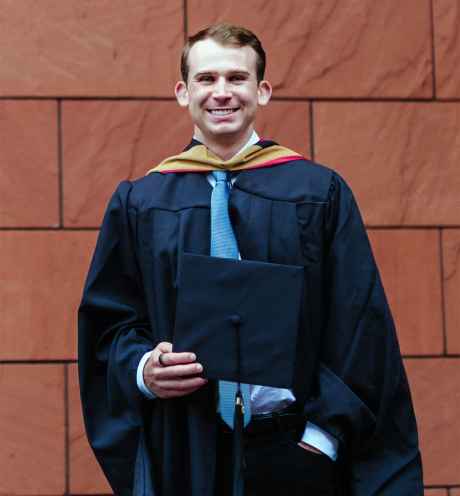
Scott has accepted that anxiety may be part of his life, but it doesn’t define him. He graduated from a business master’s program and remains committed to sharing his story, whether with friends and loved ones or at fundraising events, hoping to help others who may be struggling.
When you feel really stuck, what you want to do more than anything is just do nothing at all. But if you put in the work it requires, you can make changes in your life. You should go for it.