Sarah
Sarah
Staying well is a lifelong process
I believe that my path has been challenging for a reason, and I want to use my success to help educate others.
There is nothing to hide, it’s okay to not be okay, and it shouldn’t be taboo to talk about it.
Sarah’s path to recovery from obsessive compulsive disorder (OCD), attention deficit disorder, and post-traumatic stress disorder (PTSD) has not been straight, and it has not been easy.
At the age of nine, she first showed signs of obsessive behavior. By her early teens, Sarah truly began to struggle.
She obsessed over what people thought of her, took two-hour showers, and developed long, disruptive rituals around words and food. At this point, she was diagnosed with OCD.
I was put on medication and was seen by therapists, but I could not get ahead of this.
One day, after school, I tried to take my own life.
“You deserve to be well, and don’t let anyone take that away from you. You got this!”
Sarah spent four days in the hospital, and she was soon readmitted when she tried to hurt herself again.
I learned different ways I could hurt myself from some of the other patients, and I carried these behaviors on with me.
When I returned to school, a friend had told everyone where I had been, making my return that much more daunting.
The school system did not know how to best support me, and I was removed from mainstream classrooms and placed in an alternative program for students who have behavioral needs, and it was assumed that I did as well.
I stopped completing schoolwork. I had all of one friend. I began acting out to get my point across.
There was stigma attached to me, and I started to believe it. No one seemed to know where I fit in and neither did I.
Over the years, Sarah has been hospitalized several times.
She also spent time in a step-down residential program, but medication mismanagement and isolation abuse led her to an additional diagnosis of PTSD.
With the support of her family and friends, however, she was able to find a leading OCD specialist and other resources that have helped her move forward.
I have had multiple turning points in my recovery.
My earliest turning point was my support system. I was so blessed to have amazing parents, an understanding sister, and a dedicated best friend who never gave up on me.
As much as my parents did not know how to navigate any of this, they did what they needed to do to educate themselves and find resources to help me, and they always said, ‘Yes, we will take her home.’
I was never left anywhere just because they didn’t want to deal with me.
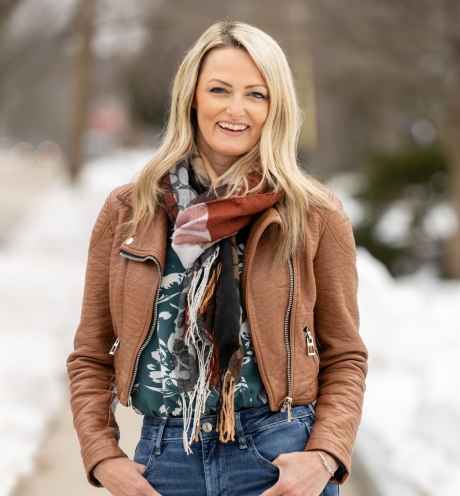
Drawing on this support, Sarah has found treatment approaches that have helped her manage her conditions. She attributes much of her success to mindfulness and talk therapy.
Now, she has a bachelor’s degree in psychology and a human resources certification, and she works as an HR business partner at a nonprofit organization.
Outside of work, Sarah spends quality time with her young son, husband, and two dogs. She also volunteers with local organizations, such as NAMI New Hampshire and the Manchester Area Human Resources Association.
If someone had told me when I was struggling the most that this is where I would be today, I wouldn’t have believed them.
Sarah knows that staying well is a lifelong process.
And, despite having experienced challenges in adulthood, such as sexual assault and recent struggles with infertility and pregnancy loss, she continues to be well.
By telling the story of her long and winding path to recovery, Sarah wants others to stay strong and fight on.
You deserve to be well, and don’t let anyone take that away from you. You got this!