Sampurna
Sampurna
At the end of the day, you’re not alone
I was free—then everything unraveled.
Sampurna, originally from West Bengal, India, had finally tasted freedom. After six months living abroad in the Netherlands, living independently and thriving in her art exchange program, she felt a shift—an unease that crept in just as she was preparing to return home to India.
What followed was her first psychotic episode, two days lost to hallucinations on the streets of Amsterdam, and a life forever changed.
For the six months that I was in the Netherlands, I was feeling very independent and empowered. A kind of fear started emerging within me. What is going to happen when I go back to India? I would no longer have the kind of autonomy I was experiencing, and that really upset me.
Shortly before she was to return to India, Sampurna lost her way to the post office and spent two nights wandering around Amsterdam without food or water. She had a “full-fledged hallucinatory experience” in which she believed someone was guiding her through the streets. She found signs and symbols where other people wouldn’t see them.
I saw somebody wearing a certain piece of jewelry, and for me, it felt like directions to where I needed to go.
Eventually, police officers noticed Sampurna’s confusion. They approached her, questioned her, and arranged for an ambulance to take her to a local hospital, where she received inpatient treatment for several days. Sampurna’s providers eventually determined her identity and notified her family. Chaperoned, she returned to India, where she was admitted to a facility for three months.
Sampurna’s experience at the Dutch hospital had been positive. Members of her treatment team talked with her and explained the situation as best they could. They gave her crayons and paper when she asked to express herself through art.
In Amsterdam, they were so gentle and handled it so smoothly that I didn’t think of not cooperating. They took their time and made me feel like I could trust them.
However, psychiatric treatment in her homeland was terrifying. Doctors and nurses didn’t answer Sampurna’s questions about treatment. Without explanation, they administered injections that made her fall asleep.
All these things made me feel like something sinister was going on.
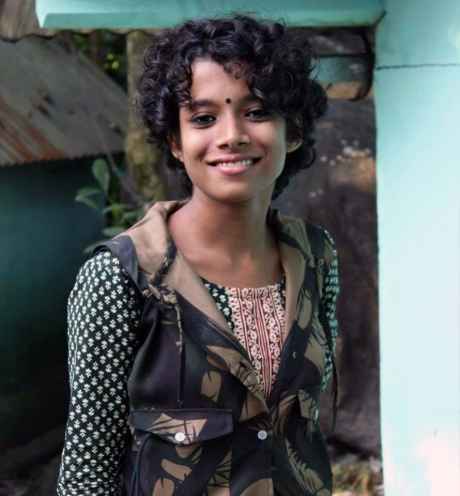
During a relapse, Sampurna was admitted to a government hospital, which she describes as a “nightmare.”
They would beat their patients and would draw blood while giving injections. I could understand why people are afraid to get help. Once you are admitted to that kind of facility, you have lost all agency.
When Sampurna was released from the hospital, she turned to the internet to learn about her condition and find different treatment options.
She now goes to a private facility on an outpatient basis. She takes medication and attends therapy monthly. Even though she is satisfied with her current care, she still experiences stigma.
There’s a lot of prejudice. Many therapists here in India recommend that you not go out and about and talk about your mental health. There can be repercussions. If you talk about it too much, people can start to take all your words with skepticism.
Sampurna lives at home with her parents as she pursues her graduate degree in fine arts. Her family is supportive of her recovery to a degree, but their compassion is limited.
Sometimes, when I had depressive episodes, my family would ask, ‘Why are you being lazy?’ Because the depression is not visible, to other people you look perfectly fine, and to them you’re just giving excuses to avoid your responsibilities.
Sampurna’s schizophrenia and depression affect her memory, energy level, and focus. She still experiences psychotic symptoms, including the sense that an outside force is guiding her. Her depressive lows can be debilitating, and she has attempted suicide.
She is passionate about her work, though, and pushes through these challenges. She posts her experiences on social media. Through her visual art and writing, she explores the link between mental health conditions and creativity. She hopes to develop an art project to raise awareness about mental health stigma in India and beyond.
Maybe it could spread to broader parts of the world where things are guarded and prejudiced. Maybe people in other areas have stories that are important and harrowing, too.
Despite all Sampurna has endured, she is unafraid to discuss her own experiences with a mental health condition.
From the time I started sensing this kind of prejudice, I was always straightforward about it.
Sometimes, others criticize Sampurna for “attention seeking,” but more often, people express gratitude for her sharing. She has cultivated an online community where she and others exchange experiences and resources.
To her, such openness is the key to recovery.
There is a lot of seclusion and loneliness. It might be that every day is difficult, but at the end of the day, you’re not alone. That is the one thing I would have liked to have known earlier.