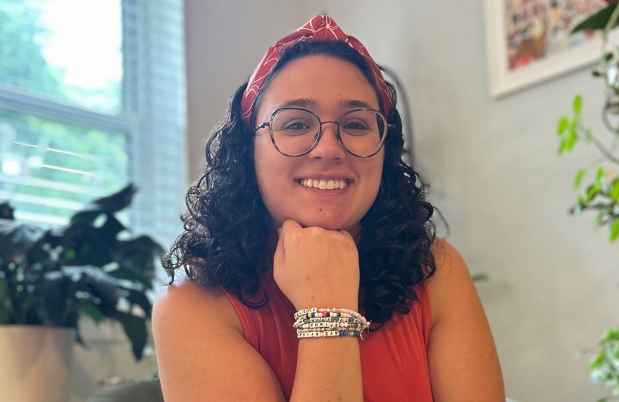
Melissa
Melissa
Find a wonderful team and rely on your “village”
If I had a chance to talk to my 13-year-old self, I would tell her that there are going to be times when you don’t feel like this.
It’s not going to last forever.
When she was young, Melissa thought she might have a mental health condition, but she was afraid to admit it.
I knew I was struggling, and I had so many opportunities to get help. My teachers would ask if I was OK. The pediatrician would ask me if I was OK.
Even though I was dying inside, I would always say, ‘I’m fine.’ I didn’t want to disappoint my parents.
I wanted to be fine, and I think I was scared of what my parents might say if I wasn’t.
As Melissa grew older, she started to suspect that she had bipolar disorder. Still, she kept quiet.
Growing up, I knew my brain couldn’t handle its thoughts and emotions the same as others.
I had several opportunities to receive help when I was an adolescent. However, I was consistently dishonest with professionals and adults about how I was feeling because I was afraid of the unknown.
When she was in college, Melissa read a memoir written by a person with bipolar disorder, and she saw many similarities between herself and the author.
Reading the memoir prompted her to seek help for the first time.
Unfortunately, she was given an incorrect primary diagnosis of major depressive disorder, and she went through a period of unsuccessful treatment.
“I know I can rely on my ‘village’ to see me through my highs and lows, as they have done in the past, and I am forever grateful for them.”
Her formal diagnosis of bipolar 1 came when she was in graduate school. Since then, she has also been diagnosed with generalized anxiety disorder and obsessive compulsive disorder (OCD).
With a combination of medication and therapy, Melissa is effectively managing her conditions.
I have been in treatment for years now, including therapy and medication management, which, in addition to a supportive network of friends and family cheering me on, help maintain my stability.
I found a wonderful team of professionals who are responsive, caring, and supportive when I need it most.
I know I can rely on my ‘village’ to see me through my highs and lows, as they have done in the past, and I am forever grateful for them.
Today, Melissa works as a speech pathologist in a school. In her job, she draws on her experiences with mental health conditions to help the students understand and manage their issues.
I think that my disorder might give me more empathy than the average person in working with these kids.
Also, I stutter. So, in working with kids who stutter, I can tell them that there might not be a cure for stuttering, but there are ways you can manage it—just like I’ve been able to manage my mental health conditions.