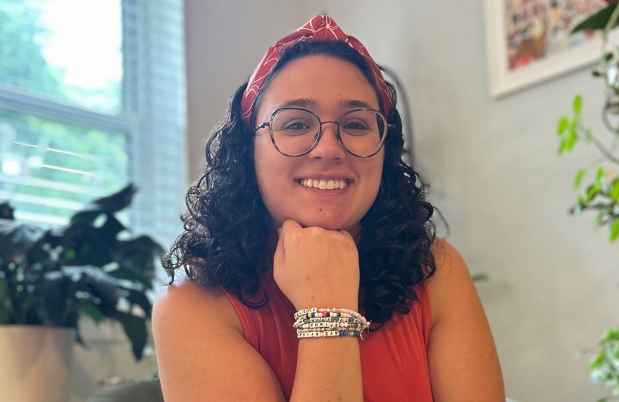
Lilian
Lilian
I’m so glad I hung in there and stuck around
Lilian, a woman who has dedicated her career to mental health, has experienced the pain of mental health struggles firsthand. She began struggling with depression, anxiety, and the effects of childhood trauma when she was 13. She began engaging in self-harm behavior and turned to substances to mask her pain.
Lilian explains that her family’s culture—Cuban and Colombian—was one where mental health and emotions were not openly discussed. As a result, even though she knew what she was doing to herself wasn’t OK, she had little awareness of how to seek help.
I was really struggling silently … On the outside, I looked like the stereotypical popular girl, but on the inside, I was hanging on by a thread.
Lilian relied on unhealthy coping mechanisms to ease her mental anguish until her freshman year of high school, when she took up competitive running. Running motivated her to focus on her health, boosted her self-esteem, and gave her a goal for which to strive.
Her dedication earned her a Division I athletic scholarship to college.
Though running helped in many ways, Lilian still struggled internally, unable to fully understand why. Years of compounded stress and trauma eventually led to physical symptoms that forced her to stop running.
“I was really embarrassed. I didn’t know what was going on. I had to stop running.”
When Lilian was forced to stop running, she felt like a failure and began having suicidal thoughts. She finally saw a doctor, who diagnosed her with depression, anxiety, and chronic fatigue and prescribed medication. However, Lilian began to self-medicate her physical pain, leading to opioid dependency.
I was a walking zombie. I just couldn’t get numb enough.
As her symptoms worsened, Lilian was hit with more concerning medical news—at 25, she was diagnosed with fibromyalgia, a condition that causes pain in muscles and soft tissues all over the body.
Despite being a successful fashion photographer, Lilian’s declining mental health made it impossible for her to work. She sought treatment at a methadone clinic, then entered a residential center where she worked through trauma-related OCD. This experience marked the beginning of her recovery, planting the seeds of compassion that now drive her work with clients.
I was there for two months. It saved my life.
Since then, Lilian has dedicated herself to helping others. She’s worked as a drug counselor, mental health companion, and coach, specializing in adolescent trauma. When she became pregnant, however, she was taken off all her medications, and her mental health began to decline once more.
My life fell apart again. I had my baby—the happiest time of my life—but I felt like I was right back at the beginning.
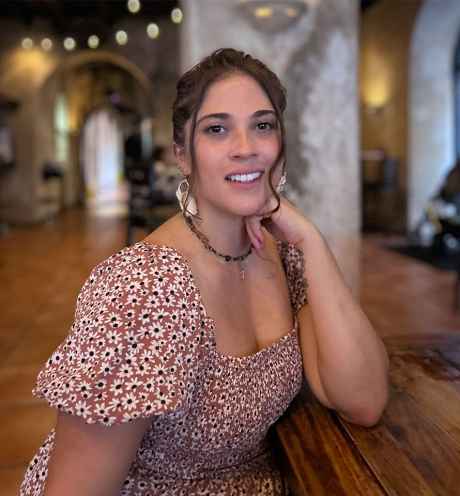
Lilian gradually re-entered the workforce and started a new medication regimen to address the postpartum depression she experienced following the birth of her first child. She also committed to therapy.
There’s plenty of support out there … Pick anybody you trust and just say: ‘Hey, I’m having a really hard time.’
Today, Lilian continues her work in mental health as a manager of supportive homes. The support she receives from her friends, family, and employer has empowered her to be the best helper and mother she can be. Lilian is proud of herself, recognizing that this new chapter with her daughter has been both the hardest and most beautiful time of her life.
I’m so glad I hung in there and stuck around. I’m in the miracle now, and nothing will ever be the same.