Leah Roni
Leah Roni
I am not ashamed!
Leah Roni was an active, sporty young girl. A tomboy who loved basketball and running. She was a guide in Bnei Akiva, and had a boyfriend whom she loved very much. While everything might have seemed fine, she knew that something was wrong.
I just felt very bad, sad, and in pain. I expressed these feelings in poems and diaries. Today when I recall it I say, ‘How much pain and suffering this girl was going through!’ I didn’t understand why I felt this way, there was no apparent reason for it.
She convinced her parents that she needed professional care for her inner sadness and pain, and she started seeing a social worker. Around this time, Leah Roni was sexually abused at Ulpana (a type of girls-only Jewish high school). She experienced post-traumatic stress disorder (PTSD), and also began to recall the sexual abuse she had suffered at a younger age, a trauma she had previously repressed.
The social worker recognized that I was depressed and that I had attempted multiple suicides and self-harm. The suicidality and sense of loneliness were strong.
One day I went to the therapist with a clear intention of leaving the appointment and just getting run over at the first opportunity. She called my parents: ‘You’re coming here and you’re taking your daughter to the ER right now.’
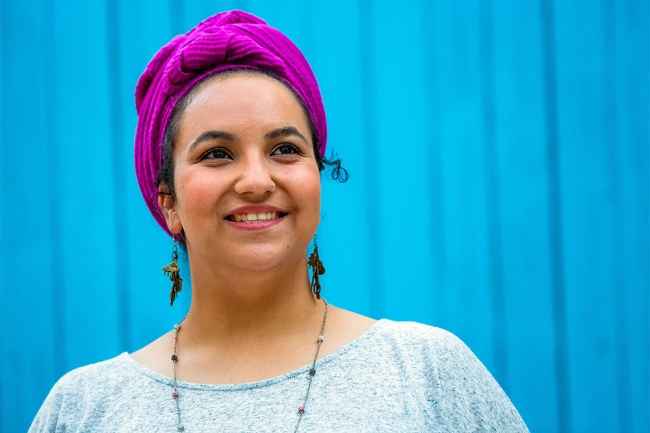
Leah Roni was hospitalized in a program for young adults so she could stabilize and start on the road to recovery.
The hospitalization allowed me to get the help I needed. I could let go. I didn’t have to please the people around me and make it look like everything was fine. Here I had my role as a patient and I was getting help.
To this day, it is important to me when I’m in therapy or working with a social worker that we have a clear relationship in which I’m the one who gets help. I need this.
Today, Leah Roni is married and is a student who will soon complete her degree in drama and teaching. She works in a daycare, taking care of babies, and loves it very much. In addition, she gives lectures to the general public on the impact of sexual abuse and mental health stigma, and also lectures to medical teams on dealing with patients with complex PTSD.
In my lectures, I talk about ways to help prevent sexual abuse. As a person who struggles with their mental health, I feel that my shame comes not from me but from the environment.
Some sexual abuse victims are unwilling to define themselves as someone with a mental health condition when dealing with PTSD from the abuse. I say, ‘I’ve been sexually abused and I have a mental health disorder because of it.’ I am not ashamed!
Leah Roni’s story is also available in Hebrew