Kellie
Kellie
Ignore everything and everyone that says there is no hope
Kellie’s struggle with obsessive compulsive disorder (OCD) began at just three years old. Unknown to Kellie’s family or physicians, the sudden onset of OCD symptoms resulted from an autoimmune disease from a strep infection—a phenomenon known as PANDAS.
Part of Kellie’s OCD manifested as excessive reassurance seeking, which sometimes lasted for hours, often resulting in frustration and tears for Kellie and her family. At the time, doctors perceived Kellie’s behavior as a “choice” and said her parents needed to discipline her more.
The impact of a misdiagnosis on a patient is detrimental. I still carry that subconscious narrative of being a bad person.
Sometimes, Kellie’s family made her stay with relatives or friends of the family to alleviate stress at home and direct more attention to her siblings.
I was the black sheep of my family growing up. OCD doesn’t just impact the person living with it—it affects the whole family.
In high school, Kellie began experiencing symptoms of body dysmorphic disorder (BDD) as well. The combination of the two diseases led Kellie to be bedridden.
The panic and over-the-top episodes transitioned to become more internal—self-isolating and self-harm. The BDD rituals were so extreme. I reached a complete breaking point. I had to drop out of high school.
Kellie was feeling hopeless. She went to an inpatient unit that wasn’t helpful for her and met with a psychiatrist that she felt invalidated her experience with BDD.
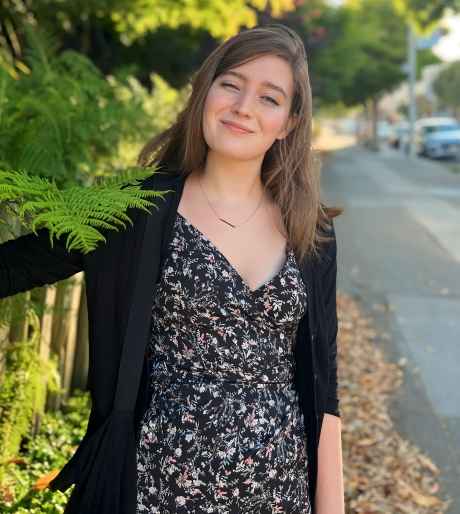
Kellie and her mom began researching alternative methods of treatment, and they stumbled across McLean’ OCD Institute. As Kellie could barely leave her room, she and her parents decided the residential level of care could be helpful to her.
I was hit with the surreal feeling that everyone in that room had OCD. It was such a hopeful feeling. If they can do it, I can too.
There was a comradery I’d never experienced, and being part of that community was the most eye-opening experience of my life.
Kellie’s time at the OCD Institute completely changed her life. She’s eternally grateful for the people she met there and the treatment she received.
Without it, she wouldn’t be able to do all the things she can today—like moving across the country, taking college classes, working a job, and having a healthy relationship with her family.
It was such a paradigm shift between the first 18 years of my life and then going to the OCDI. Sometimes I’ll think, ‘Wow, I can’t believe I’m still here and still alive.’
Kellie wants people to understand the severity of OCD and the many different ways in which it can manifest.
Living with OCD is knowing that to the rest of the world, your disease is a punchline and a joke.
People are going through hell without knowing it’s OCD. It almost killed me, and the fact that I’m here today is a miracle.
Having been through multiple forms of treatment that proved ineffective and damaging, Kellie knows how it can feel like there’s nothing left out there.
Now, Kellie is able to live the life she wanted to while continuing to manage OCD today. Thanks to continued treatment and medication, her symptoms are nowhere near as debilitating as they used to be.
Ask, ‘Is this all that there is?’ No, there is hope. Ignore everything and everyone that says there is no hope. You know yourself better than anyone else.
Now I have a life and OCD, whereas before, I just had OCD.