Katie
Katie
Speaking out can be scary, but it is also powerful
When I was diagnosed with schizoaffective disorder, I was terrified of the stigma. I thought all my friends would leave me, and people would be afraid of me because of the way psychosis is portrayed by the media.
As I began disclosing my diagnosis, I realized that most people didn’t know much about schizoaffective disorder, but they were willing to learn. I began writing and speaking publicly about my experiences, and I have seen the power of putting a real face to mental health challenges.
Speaking out about mental health has become Katie’s mission. But having the courage to tell her story took time.
I had been depressed since I was a child and struggled with obsessive compulsive disorder (OCD) rituals. At 17, the depression became unbearable, and I sought help for the first time.
I was diagnosed with depression, then, as symptoms like hallucinations and delusions appeared, schizoaffective disorder.
After a traumatic relationship, I developed post-traumatic stress disorder (PTSD) and was treated for that several months later. My OCD was treated around the same time.
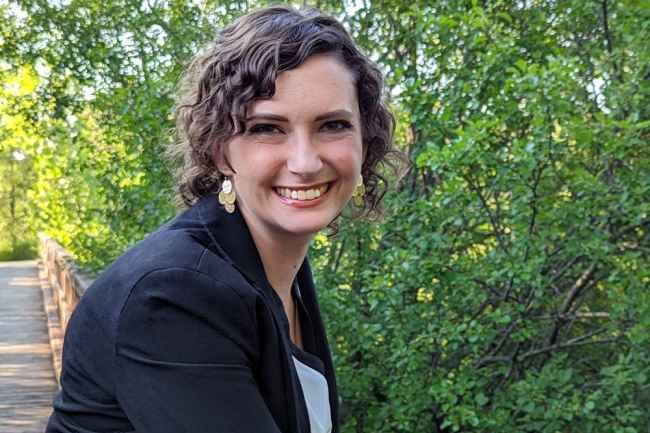
Katie told only a handful of people about her diagnosis. She was afraid that some people would be horrified to learn that she had a mental health condition. Also, as a top student and a record-setting athlete, Katie was afraid that people would be disappointed in her.
Suddenly, I was struggling with the cognitive deficits that come with schizoaffective disorder. I felt like I let everyone down—my teachers, my coaches, my parents, even my friends—because I wasn’t as upbeat or energetic or really my old self at all.
Katie went on to college, where she learned as much as she could about her mental health issues and how they could be treated.
I learned more about my disorder while completing my bachelor’s in psychology, which is where I first learned of early intervention programs. I also spent three years—during and after college—working as a research assistant to professors studying schizophrenia.
I wanted to find answers, like how to combat the cognitive deficits. I also wanted to better everyone’s knowledge and come up with more effective treatment methods.
While in school, Katie also found an organization on campus that enabled her to speak publicly about her situation.
I was really nervous to speak the first time, but I was blown away by the overwhelmingly positive response. People said that I had changed their views of schizoaffective disorder.
Armed with new knowledge about mental health and the courage she gained from speaking out, Katie joined her local National Alliance on Mental Illness (NAMI) chapter. There, she continued to share her story.
“I have seen the power of putting a real face to mental health challenges.”
Through NAMI, she also got involved in crisis intervention training, helping to teach law enforcement and correctional officers how best to respond to mental health crises.
Now, she hopes to pursue a career in mental health advocacy and encourage others to battle stigma and find the strength to get help.
I know it’s scary. I remember being afraid everyone would abandon me and look down on me if they found out about my symptoms or diagnosis. But, without treatment, my life would only have gotten worse.
You don’t have to suffer in silence. And there are people out there who will love you and support you, even if those around you don’t. It truly is worth the risk.