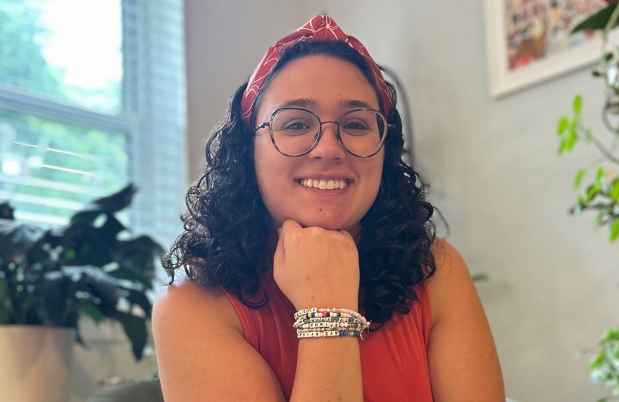
Jon
Jon
Empathy and understanding
Jon has a tattoo on his wrist that says, “Just thoughts.” He got the tattoo to help him cope with his obsessive compulsive disorder (OCD), and to remind himself that he cannot let his intrusive thoughts define who he is.
That phrase, ‘Just thoughts,’ is something I live by.
When you have OCD, a lot of these intrusive thoughts can cause functional impairment and distress, but you can’t let them take control of your life.
Jon was first diagnosed with OCD when he was a senior in high school. He was heading off to college, which made him nervous about change and unsure about what the future would hold.
Realizing that feelings of depression and anxiety had intensified, he went to see a doctor, who diagnosed him with OCD.
I thought everyone had OCD because the term is used so loosely. When people use the term improperly, it’s upsetting for someone who actually struggles with the disorder.
Before Jon started college, he saw a therapist, but he did not receive effective treatment for his symptoms. At school, Jon bottled up his feelings and ended up withdrawing from college after his sophomore year.
While back home living with his parents, Jon knew he needed more help. He ended up walking from his house through a raging snowstorm to check himself into a hospital.
“I had been in short-term hospitalizations before, but this was a turning point.”
In time, Jon was recommended to enter the Obsessive Compulsive Disorder Institute, a residential treatment program at McLean Hospital.
He spent more than four months at McLean, learning the tools and skills he needed to get his OCD under control.
When I was discharged, I knew that I still had a lot of work to do, but I had a fantastic outpatient therapist who helped me continue my treatment.
Slowly, I started to see myself get better and get my life back on track.
Jon committed to his treatment and saw results. He went back to school and finished his college education.
Then, he got involved in research, working in the OCD lab at a prestigious medical school. After a brief detour in the corporate world, Jon returned to his passion—mental health.
Today, he works in a specialized outpatient clinic for adults with OCD and OCPD, and he is planning to pursue a PhD in clinical psychology.
Because I have OCD, I may be able to provide some perspective to my future patients who struggle with the condition.
I don’t think it’s necessary for a clinician to have experienced the same thing as a patient, but it could be helpful.
Empathy and understanding are key ingredients for success while trying to treat a patient for any disorder.
With his life back on track and a new career ahead of him, Jon is excited about the future.
He knows that dealing with mental health conditions is a lifelong process, and he needs to continue to rely on the skills he’s learned to keep his OCD symptoms under control.
He also knows that when intrusive thoughts enter his mind and threaten his progress, he can simply look down at the tattoo on his wrist and remember, they’re “Just thoughts.”