Jackie
Jackie
Embracing a diagnosis can be life-changing
I do not outwardly appear like I struggle with my mental health—because there’s no such thing as ‘looking mentally ill’—nor do I fit into the boxes some people place individuals with mental health disorders in. I work full-time, I went to college, and I received my master’s degree.
I did all of that while living with, and continuing to live with, numerous mental health conditions.
Because she has dealt with mental health challenges since she was a child, Jackie has a broad perspective on mental health, and she isn’t afraid to share her thoughts and stories.
I’m not the type of person to shy away from talking about my journey with mental health, especially knowing that sharing my story could help someone else.
I try not to sugarcoat things or omit the messy bits because both the good and bad days make up my experiences as a whole.
Jackie began seeing a child psychologist after pulling out a patch of hair when she was a child. As a teenager, she began taking medication for depression and anxiety, attended talk therapy, and engaged in electroconvulsive therapy (ECT) following a suicide attempt. She also attended McLean’s OCD Institute to treat her obsessive compulsive disorder (OCD).
More recently, Jackie was diagnosed with borderline personality disorder (BPD) when she consulted a psychiatrist about going back on antidepressant medication. Her psychiatrist looked into her file and asked if anyone had ever spoken with her about BPD.
I was hostile about it at the time because I didn’t have a great understanding of what it was. All I could think of—and I know it’s stereotypical—was bunny boilers, like in ‘Fatal Attraction.’ I was like, ‘That’s not me. That can’t be me.’
However, when the psychiatrist explained the BPD diagnostic criteria, Jackie found herself relating to every point.
I just found myself saying ‘yes’ time after time.
“Although it’s scary to ‘come out’ as a person with a mental health disorder when the people around you might not fully understand what you’re going through, you have to do it in order to be the best version of yourself.”
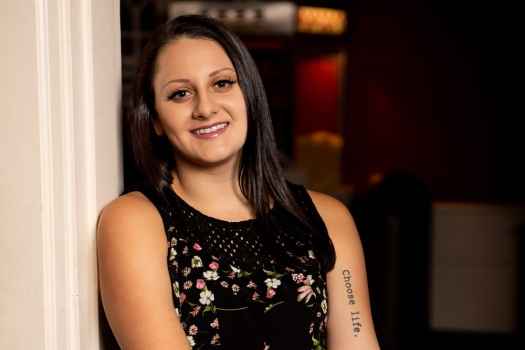
Although Jackie had complicated feelings about a BPD diagnosis at first, it has since changed things for her. While she still lives with OCD, she now realizes her BPD affects her daily life just as much.
Once I really sat with the diagnosis and used the resources my psychiatrist gave me to understand how BPD affects people, I did feel like it was very accurate. Now I fully embrace it with a much better understanding of what it actually is.
The BPD diagnosis led Jackie to try dialectical behavior therapy (DBT). Thanks to the treatment, she learned life-changing skills.
DBT has changed my life for the better. I used to be a very explosive person who just couldn’t manage my emotions, and now I’ve learned mindfulness techniques. I can identify the moment between a trigger and my reaction to choose something different and healthier.
In hopes of helping others, Jackie shares her experiences with anxiety, depression, OCD, and BPD through her writing.
She says that while it’s scary to “come out” as having mental health conditions—when people around her might not fully understand what she’s going through—she has to be open to be the best version of herself.
Though mental health disorders are chronic, and we who have them will likely struggle for the rest of our lives, we can live happy, successful, and productive lives in spite of them. Mental health conditions are not our fault, but they are our responsibility.