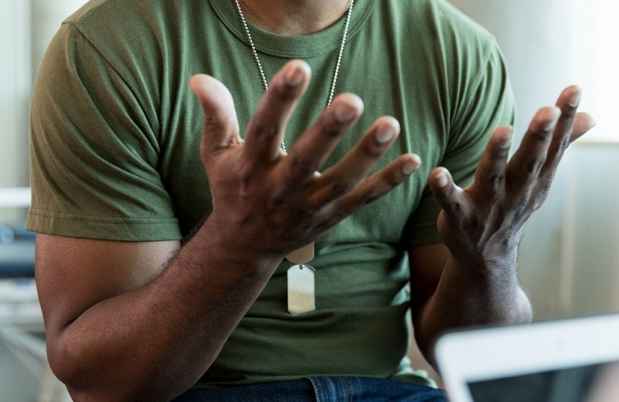
Edmund
Edmund
I hope that by speaking up, it helps other first responders
It wasn’t just the big, shiny, red truck or the superhero-like uniforms that drew young Edmund toward a career in firefighting.
Growing up, I knew I wanted to be a public servant. I wanted to be the person everyone wanted to see—the one who helped other people feel safe.
During his nearly ten years on the job, he experienced some close calls. Rushing into buildings on fire, he was frequently called into others’ worst or final days.
While he was passionate about the mission, he began to have trouble sleeping.
Alcohol became a tool to dull the pain.
He would have angry outbursts, and then struggled with anxiety and what he later learned were panic attacks.
These experiences were too overwhelming to always manage quietly. Thankfully, his partner, a social worker, helped Edmund see that he needed professional help.
You don’t realize how sick you are. My body and mind overcompensated for my condition.
Powering through the depression felt like a necessary part of the job and living my life.
Forcing a smile after a flashback was a daily routine.
I didn’t understand the weight of these mental health issues until I went to therapy.
“The stigma around mental health is alive and well in the first responder community, and I hope sharing my journey creates a path through it for others to get help.”
Through the years, the traumatic events continued, and the coping mechanisms worked until they no longer helped.
I got hurt at work and needed surgery. While I was healing physically, my mental health symptoms got worse and developed into my biggest challenge yet—post-traumatic stress disorder (PTSD).
Unfortunately, despite my best efforts, work-related PTSD cost me my career.
With his dream of helping others by fighting fires now extinguished, he and a fellow firefighter started The Authentic Abstraction First Responder Foundation, a resource to support fellow firefighters by providing an outlet for judgment-free emotional expression through any artistic medium—music, painting, woodworking, and poetry.
They sell their work to fund their nonprofit’s mission and conduct workshops/events on the healing power of the arts.
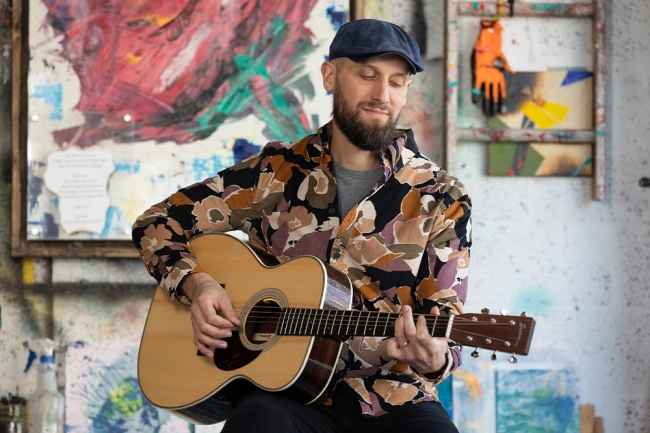
They’ve also written a book, sharing their journey of firefighting and working through PTSD.
I speak up now for other first responders. You don’t have to hide the pain. Or drink to make it through. Or watch from the outside as relationships crumble, thinking it’s part of the job.
You were born with courage. Save some for yourself and use it to get help. Be the change.
The stigma around mental health is alive and well in the first responder community, and I hope sharing my journey creates a path through it for others to get help.
I know I signed up to do a difficult job, but I did not sign up to get sick.
I dream of a day when first responders are supported physically, mentally, and emotionally, so we can continue doing the work we love and that society needs.