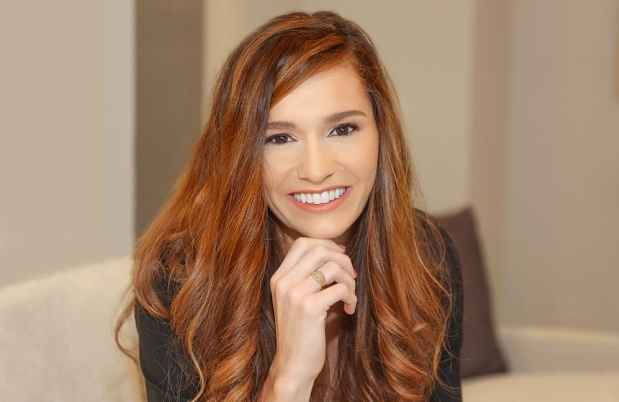
Brittany
Brittany
It’s okay to not be okay
At age 6, Brittany played with dolls and took trips to the park. She also spent a lot of time worried about her mom.
Brittany had witnessed violence in her home, and she was afraid that the abusive relationship her mother was involved in would end tragically. Like many survivors of childhood trauma, Brittany pushed the memories deep inside.
I developed a fear of the dark. Throughout the years, a certain smell or a piece of clothing worn by someone would act as a trigger and take me back to that fear, completely out of the blue.
The anxiety that evolved as part of post-traumatic stress disorder (PTSD) would manifest itself in many ways. Brittany did very well in school, but she developed an eating disorder—anorexia—an attempt to gain control over her mind and body by restricting food.
When she landed a job as a housekeeper at a nearby hospital, she developed severe obsessive compulsive disorder (OCD).
After my shifts, I became anxious that I was bringing contamination home. I started cleaning my car every day with Lysol and wipes.
I would clean my shoes over and over again. I wouldn’t let anyone come into my house because I didn’t want them to carry in germs.
These types of rituals would take an entire day. Brittany prayed to die in her sleep. In fact, she was involuntarily admitted to the emergency department with thoughts of suicide more than 10 times while in her 20s.
Her panic attacks became so frequent that Brittany couldn’t hold down a job and had to go on disability.
“Families should come together and learn how to heal from past trauma and commit to doing the work.”
Then in the fall of 2019, Brittany had a breakthrough of sorts. She woke up at 4am with a pressing need to tell her story.
I would go down to the corner store, sit at the table, have barbecue chips and soda, and start writing on my smartphone. I’d write a little each time.
It was around that same time that Brittany decided she needed help. The emptiness inside had become unbearable.
This time, she went to the emergency department on her own and actively participated in her treatment. At age 29, she was diagnosed with borderline personality disorder (BPD).
Brittany began writing more, finding that it helped her understand her condition better. She has self-published numerous books about her journey.
Others have said I have a victim mentality. That I should pull myself up by my bootstraps. That I’m using my mental health as an excuse and that I should be grateful for what I have.
Brittany has faced and continues to face many challenges, including currently being homeless. While her family has tried to be supportive, their lack of understanding about her disorder and her experiences has led them to be distant, particularly when she needed them most.
Brittany has embraced her faith, and she credits it with helping her “let go.”
She believes that telling her story is helping others. She has become a fierce mental health advocate. In addition to her writing and detailing her journey through interviews and podcasts, Brittany likes to garden, walk, practice yoga, and listen to music.
We need people to understand how the brain and the nervous system work and how it all connects to mental health.
Families should come together and learn how to heal from past trauma and commit to doing the work.