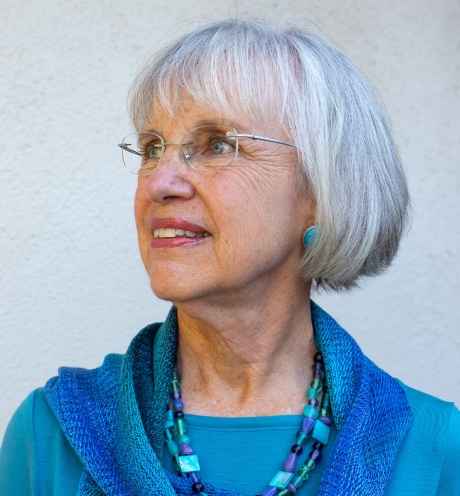
Barbara
Barbara
Finding happiness from within
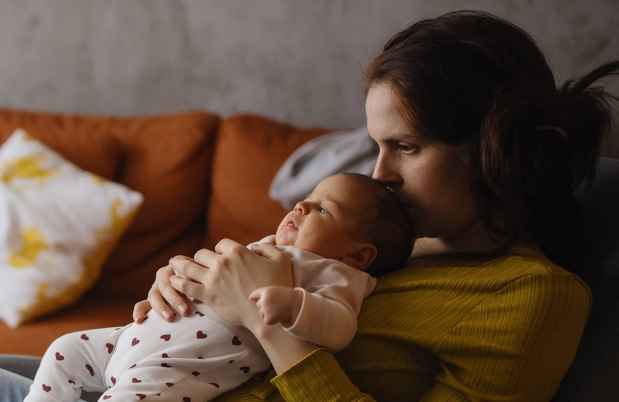
When Barbara experienced severe postpartum depression after the birth of her daughter, she was suicidal and admitted to a local hospital’s psychiatric unit.
The experience was distressing—not only because of Barbara’s despair and confusion, but because of the self-stigma she developed.
It was very disturbing for me to be in that kind of situation. I hadn’t been around ‘those kinds of people’—people living with acute mental health challenges. I didn’t see myself as one of them.
Barbara was fortunate to receive excellent psychiatric care and effective medication. However, she remained unhappy about having been hospitalized and about having a mental health diagnosis, major depressive disorder.
I thought of myself as a damaged human being.
She maintained negative beliefs about herself for several years until she decided to make a change.
She asked her psychiatrist to help her identify the root of her unhappiness. Together, they delved into several issues. Chief among these was her tendency to be a perfectionist and the idea she held that she wasn’t lovable unless everything she did was perfect. As a part of this process, the doctor inquired about Barbara’s spirituality, an area she hadn’t previously explored.
When he asked if I would like to learn how to meditate, I thought, ‘You’ve got to be kidding me! Sitting around … doing nothing. How is that going to help anything?’
She promised herself she would do whatever her psychiatrist suggested, though. She started meditating for 5 minutes, 10 minutes, and sometimes for longer periods each day.
It was literally the only time I wasn’t running from one activity to the next. I went back to him after a couple of weeks and I told him, ‘I don’t know where it came from, but I’m happy.’
Barbara says she’ll never forget his response: “It came from you.”
It was the first time Barbara thought perhaps there was something sacred inside her.
Happiness could come from that inner source rather than from being perfect at something outside myself.
She felt so ecstatically happy at this revelation that she believed her depression was cured, so she stopped taking her medication.
Three weeks later, she experienced psychosis and returned to the psychiatric unit for the first time since her initial hospitalization eight years prior.
While there, she had delusions that she was dead, that the psychiatric unit was heaven, and that she and her fellow patients were all God’s children. She believed she was waiting to be reborn.
She hadn’t had any such delusions during her first hospitalization—just symptoms of depression.
Once she started taking medication again, she realized that something had indeed been resurrected.
My old vision of myself as a damaged human being died, and a new person was reborn with a good self-concept and a happy existence. I came back as a changed person.
“Happiness could come from that [sacred] inner source rather than from being perfect at something outside myself.”
In fact, Barbara found a new vocation.
She decided to retire from her previous career as a software engineer and entered seminary to focus on spirituality and the importance of emotional well-being. Now, as an ordained Unitarian Universalist community minister, she works in a mental health center as a peer support specialist.
Barbara continues to take the same medication that worked from the beginning. She meets with a psychiatrist three times per year for a checkup, and she meets with her spiritual director monthly to discuss life and spiritual issues.
Her family has always supported her through her challenges, and she has many coping strategies. For years, she has been a weaver, and more recently, she has taken up felting.
Fiber art projects take my mind off issues I’m stewing over and bring me to another level when I’m ready to face them.
She also reads voraciously and gets regular exercise by walking and lifting weights.
She meditates less often now but still uses the meditation mantra her psychiatrist taught her. For Barbara, meditation and medication work well together; meditation gives her a much-needed break in a busy day, and medication keeps the depression and psychosis away.
Barbara hasn’t had a significant mental health issue since she was hospitalized that second time in 1986.
For anyone who reads her story, Barbara has a message:
I want each of them to know that they are a very precious human being. If they get in touch with who they are inside, and live authentically from that center, their lives will be the best they can be.