Ashley
Ashley
With treatment, I felt different
The breakdown hit as Ashley sat on a bench in Midtown Manhattan.
She had just been discharged from a New York hospital after a manic episode kept her awake for 10 days straight. Doctors released her with no plan in place to help. No new therapy. No new medications. Exhausted and hopeless from a decade-long battle with an disorder she could not control, Ashley desperately just wanted to go home. Her brother drove from Boston to pick her up.
When I got into the car, my mom called. She told me I would always be welcome home. But she could only give me love. And I needed more than that.
Looking back, Ashley recalls that as a kid, her mind would race—her thoughts changing rapidly. At 13, she fell into her first deep depression, an overwhelming feeling of gloom held her to her bed for days at a time.
In high school, she notes incredible highs where she would feel invincible. She would drive recklessly and overdraw her checking account.
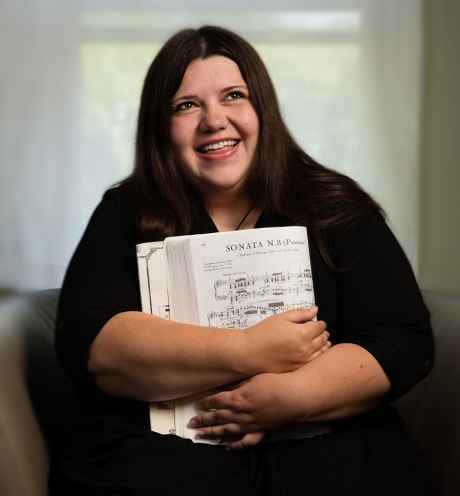
She started college as a music major, but when her high crashed, so would her grades.
The depression would set in again. I felt terrible for all the bad decisions I made when I was ‘up.’ Worthless. Helpless. I experienced every negative feeling there is.
At times, the dark thoughts and the energy bursts would hit at the same time, leading to hallucinations, paranoia, and self-harm.
One episode prompted Ashley to hurt herself so badly she needed 17 staples. Another time, she hid under a table for an entire day, certain the people in her life were out to get her.
These were a hellish clash of opposing forces, like revving a car engine and hitting the brakes at the same time.
These mixed episodes made proper diagnosis tricky. Finally, at age 18, after three years of being misdiagnosed, doctors told her she had bipolar disorder.
Over a span of 10 years, Ashley was hospitalized seven times and tried 20 medications. Nothing was working.
As much as Ashley did not want to go to yet another hospital, her mom convinced her during that long ride home to try one more—McLean Hospital.
I was placed in a unit where everyone specialized in bipolar. Doctors were surprised I hadn’t been on the right medications. I met other patients struggling with this disorder that I still am in touch with today.
Now, it’s five years later. Ashley and her mom shared a cross-country trip of a lifetime this past summer. Ashley is back in college part-time, this time with an eye toward social work.
She has begun to get back to her music—and really enjoy it.
This condition is an everyday struggle, and it will be for the rest of my life.
Even though that’s the case, it is possible to live with and move forward.