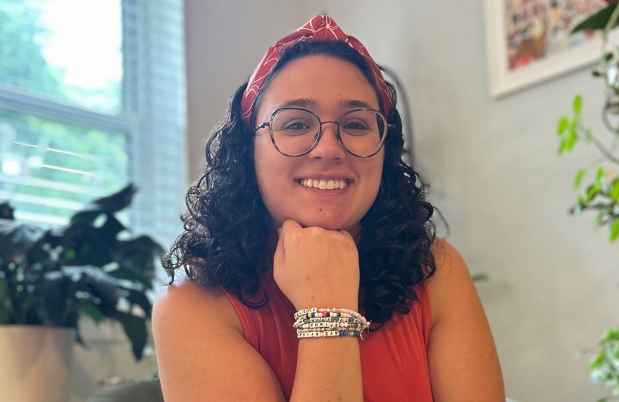
Allie
Allie
Taking care of yourself is taking care of others
Allie began experiencing shifts in her moods when she was in her early twenties. She experienced increased depression and anxiety. Soon after, she began engaging in self-harm and contemplating suicide.
Allie noticed a loss of functioning in both her personal and professional lives. She struggled to get out of bed, struggled with dissociation, and was increasingly unable to perform basic care tasks.
Eventually, she started experiencing paranoia and auditory hallucinations, and it was impossible to deny the obvious: something was very wrong.
At one point, Allie recalls having to ask herself, “Do I give up or do I do something?” Allie took a medical leave from her work at a nonprofit and was hospitalized. While in treatment, she was formally diagnosed with obsessive compulsive disorder and borderline personality disorder.
It was a relief to receive diagnoses that captured what I was experiencing so accurately.
It was also terrifying because BPD is so negatively portrayed. There are so many myths and misconceptions about what personality disorders really are.
The stigma associated with a diagnosis doesn’t just come from the outside—I had to grapple with my own feelings of shame and self-doubt in order to engage in treatment.

Allie began her treatment journey shortly after she received her diagnoses. She tried a few different day programs and therapists that she could tell were not the right fit for her.
Despite having a solid support system, it took Allie years to find treatment that met her needs. It took even longer to find the right combination of medications to manage her symptoms.
You have to keep pushing until something is working for you, which is such a huge ask of someone already struggling.
It’s okay if the first therapist you have isn’t a great fit. That is normal and happens more than you think. I don’t think I’d be where I am today if I hadn’t pushed until I found the right treatment providers.
After trying several different forms of treatment, Allie finally began treatment at McLean’s mentalization-based treatment (MBT) clinic, where she participated in weekly group programming and individual therapy. She also attended acceptance and commitment therapy (ACT) group sessions weekly.
Though they are lesser-known forms of treatment, MBT and ACT were integral to managing Allie’s symptoms.
It can be very difficult to make space for being in treatment. At first, it felt very indulgent.
Feeling like all that attention is on you can feel embarrassing, but the most selfless thing you can do is endure that feeling of unease and push through to do what your care team suggests.
Taking care of yourself is taking care of others.
“There are so many myths and misconceptions about what personality disorders really are.”
Although treatment has been essential in managing Allie’s symptoms, so much of the struggling in her life came from feeling like she was a burden to those she loved.
Feeling like she was taking things away from her partner and family was a huge barrier to her healing process. However, treatment helped Allie see her condition from a new perspective.
It’s not about fixing yourself for the convenience of everyone else.
Everyone deserves to have space made for them, but it’s hard to get to the point where you are willing to accept that space.
When Allie did feel comfortable reaching out to friends and family, she was surprised by what she found.
I was overwhelmed by how many of my friends and family wanted to stand by me through this whole process, and even more overwhelmed by how much energy they put into loving and supporting me exactly as I am.
The happiness and stability I have today were built hand-in-hand with my husband, family, friends, and clinicians.
If I could tell people who are struggling right now one thing, it’s that you can have so much happiness and accomplish so much, but you can’t do it alone.