Sylvia
Sylvia
I went through this process alone because of the stigma
2012 was a very hard year for Sylvia—her uncle was diagnosed with an illness, she began to have many doubts about herself, it was difficult for her to adapt, she broke up with her partner, and she made the decision to leave her job.
This caused her a lot of anxiety, but she did not seek the help she needed. Instead, she self-medicated to reduce the symptoms of anxiety.
I did not have the tools to cope with my anxiety and did not have the words to identify what I was feeling.
When I lived in Guayaquil [in Ecuador], I felt that I didn’t match with what society asks of you or expectations that you must meet.
I felt that my mind was more curious and that I didn’t fit in with my peers. I put myself under this pressure and this caused me to overthink a lot. I didn’t allow myself to distinguish between the reality and the perception.
She made the decision to prove to herself that she was independent and decided to go study in Spain. This stage in her life produced feelings of self-sufficiency and satisfaction, but she was forced to return to Ecuador. The feelings of frustration returned, especially in the work environment.
At the age of 29, her aunt died suddenly. This event was a shock for her, which led to a decision to regularly engage in talk therapy. She began the therapeutic process in silence and on her own.
In the beginning, it was very scary for her because therapy started to bring up things that she didn’t want to talk about.
I learned to accept things that I had previously had trouble accepting and to love myself without mentally beating myself up all the time or letting my mind dominate me all the time because of the thoughts I had.
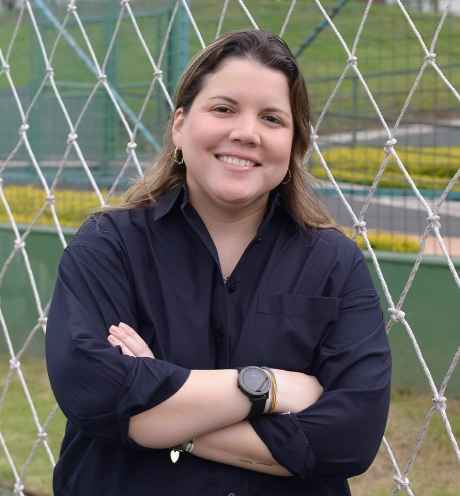
In therapy, she learned to identify the days she did not feel well and to listen to herself. She began to apply tools in her daily life that helped her, such as meditation and journaling. She learned not to ask too much of herself.
After a few years, a tumor was detected in her left ovary. She had an emergency operation and experienced post-operative anxiety. Her anxiety presented as body pains, such as stomach pain, headaches, and chest pain. She did not feel like getting up and could not externalize what she felt—she did not know how.
Many of the things she did to calm the anxiety were no longer having an effect. Sylvia decided to go to a psychiatrist.
My story began to change. I will tell you the truth: the process is not going to be easy. When you realize there is another way to live, you realize it is the way you want.
She works on her therapeutic process every day, generating awareness and working to accept her brain as it is.
I went through this process alone because of the stigma. A zombie had more life than me. I was numb all the time. But this same brain has given me positive things too.
Sylvia is a sports commentator, journalist, lawyer, and marketer. It is hard to juggle anxiety and work, especially since she is a well-known personality. Sometimes, her anxiety can be so overwhelming that it makes her feel unwell and she would like to cancel some events, but she worries people would not understand.
In Ecuador, we don’t have a mental health system and still have a long way to go to accept that mental health is one of the great epidemics that affects many people. I don’t want others like to feel bad for having a mental health condition, because this doesn’t make you less than anyone else.
Sylvia’s story is also available in Spanish