Paula
Paula
Being resilient is in my genes
“There’s nothing wrong with you.”
“You don’t need to talk to someone.”
“Don’t go tell a stranger about your problems.”
These are the things Paula heard about mental health growing up. Even though Paula’s adoptive mother struggled with her own substance use disorder, she never got the professional help she needed, which had a huge impact on Paula’s childhood.
I had a parent who failed me as a caretaker, who was chronically dependent on substances, and whose substance use became her number one priority.
Paula felt unwanted, uncomfortable, and unsafe in her own house—a victim of physical and emotional abuse. At school, she was always on guard and anxious. She often zoned out in classes and felt down about herself.
Paula didn’t know this wasn’t normal until a school counselor referred her to professional help when she was 16. She was having disturbing flashbacks and was diagnosed with post-traumatic stress disorder (PTSD).
I didn’t really know at the time that that’s what it was, because I had grown up in this dysfunctional family.
Paula started therapy and did OK throughout high school, but she struggled when she got to college. After completing her first year, she decided to take a step back. She went to a community college where she could take fewer classes while focusing on getting the help she needed to take care of her mental health.
I didn’t get a chance to really enjoy college because I didn’t know the effect that my PTSD had on me. It’s something that haunted me, and I struggled with that.
But from a young age, I knew that drugs were not the way to cope, so I sought out professional help.
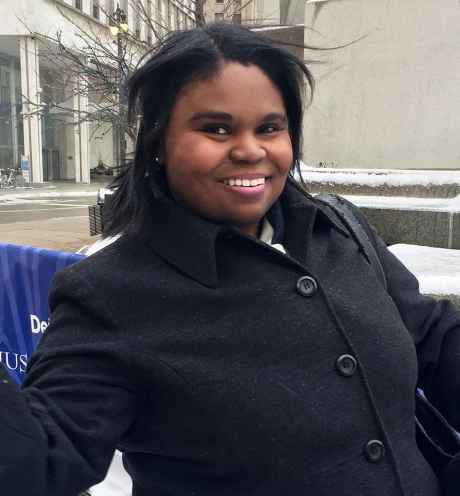
After taking time to begin healing, Paula was able to return to school and earn her associate’s degree. Toward the end of her degree, Paula was shocked when her French professor told her she was actually her biological mother, with pictures to prove it. Until then, she’d had no idea she was adopted. Learning that helped everything make sense: her mental health, her PTSD, and her dysfunctional family.
I always felt deep down that something was wrong because of how they treated me. Now I know the things that I had gone through were, in part, because I wasn’t their child.
Paula has kept in touch with her biological family and has even grown close to her great-grandfather, who is a survivor of the Holocaust. To Paula, finding this piece of her puzzle was crucial.
Having a relative who went through this historical trauma is an interesting connection to my own PTSD. Being very resilient—it’s in my genes.
Knowing what her ancestors went through and survived has given Paula even more motivation on her own healing journey.
I’m so proud that I’m the great-granddaughter of a Holocaust survivor. Had he not survived, I wouldn’t be here.
Now, Paula works as a state case manager, helping people with food stamps, Medicare, childcare, and other services. At the same time, she’s back in school, working on earning her bachelor’s degree in political science.
She continues to receive treatment for her mental health and feels that her ongoing treatment allows her to work well, be effective with her clients, and do things she enjoys. Paula hopes that anyone needing treatment isn’t afraid to reach out for it.
There’s nothing to be ashamed of for needing help. Seeing a professional for mental health care is no different from seeing an orthopedic surgeon if you break an arm.