Kate
Kate
Recovery is a learning process
If there is one thing that Kate is familiar with, it’s stigma.
During the years when the HIV/AIDS crisis was ravaging Africa, she worked on community-level response programs. She observed how people were ostracized, judged, and feared for their diagnosis and saw how these attitudes prevented people from getting the help they needed.
Years later, when Kate’s son struggling with substance use and sustained a traumatic brain injury, she learned that fear and shame exist beyond the world she knew.
I recognized the assumptions, the judgment. The stigma around addiction brought out all the ‘experts’ who labeled my son as reckless and me as enabling.
He and I followed their lead and blamed ourselves, too. We lived with that shame.
Nobody remembered my son was a brain injury survivor with cognitive impairment. All they saw was an ‘addict.’ It’s a very sticky label.
Kate and her husband adopted their son when he was six and from the start, knew he struggled with mental health challenges.
He was uncomfortable in his own skin from the get-go, but we believed that love and stability would prevail. And they did. We had ten wonderful years.
Then, at sixteen, the substance use began, and 7 years later, he nearly died from a drug-induced stroke. The subsequent brain damage intensified his substance use.
Not only was he anxious, but he also still held deep trauma that he blunted by using drugs. With diminished executive function, he had poor impulse control and no natural way to stop.
His poor short-term memory kept him from employment, and he had lost any sense of purpose.
After cycling through rehab and halfway houses, Kate’s son ended up on the streets where he attached himself to a young woman whose issues were similar to his own. The two of them refused offers of support, only contacting Kate when they needed money. Those interactions usually didn’t go as they’d hoped.
Kate finally conceded that there was nothing more she could do, and that the death he had eluded after his stroke would finally catch up with him. She wondered if she’d even be notified. To reclaim their own lives, Kate and her husband moved from their home in Canada to Mexico.
Those years were very dark. During a counseling session in 2016, I came to the realization that he really was gone from my life. He had cycled out of my sphere.
We had come together through a miracle of its own, and it had been wonderful while it lasted. But that was all I was going to get. And it was OK to let go.
Her son’s return came unexpectedly when his girlfriend abandoned him. A police wellness check found him living in a park and it took four months for Kate and her husband to coax him in off the streets.
“[My son’s] sobriety isn’t perfect, but it works. We are closer now than we have ever been. We are a fully-functioning family.
I still help him a lot, especially with the administrative tasks that adulthood demands.”
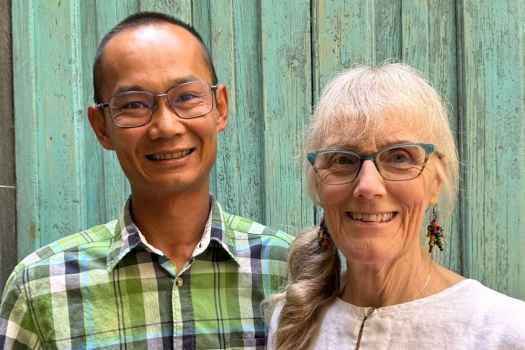
He eventually entered rehab and then lived primarily with a supportive services provider, “a second mum,” for three years, before returning to live full-time at home with Kate.
Housing, consistent routines, connection, boundaries, physical exercise, and administrative support are vital.
I was lucky to be able to provide them—first through my ‘co-madre,’ and then here at home.
These days, Kate’s son lives with his parents in Canada where he attends a vocational training program for carpentry.
He’s a surprisingly good roommate. He’s engaged in cooking and cleaning, maintaining the house, and being a good neighbor.
His sobriety isn’t perfect, but it works. We are closer now than we have ever been.We are a fully-functioning family.
I still help him a lot, especially with the administrative tasks that adulthood demands.
Kate would like people to know that brain injury and addiction often go hand in hand, and that recovery looks different for somebody who has both.
This kind of recovery needs to be accommodated, and it may not benefit from regular programming. Traditional methods require short-term memory and development of insight.
Goal setting, planning, and understanding consequences are built in from the outset.
Reading, journalling, listening, and reflecting are expected every day—this is hard work for anyone, but especially challenging if you have a frontal lobe injury.
The support that’s needed is really hands-on and it takes a long time.
Kate and her son have written a book about their experiences that is equal parts memoir and guide for recovery from the invisible dual diagnosis of brain injury and addiction. They want other families to know progress follows a different trajectory than recovery from addiction alone.
For my son and me, viewing healing through a brain injury lens, not solely as recovery from addiction, provides an entirely new perspective on it.