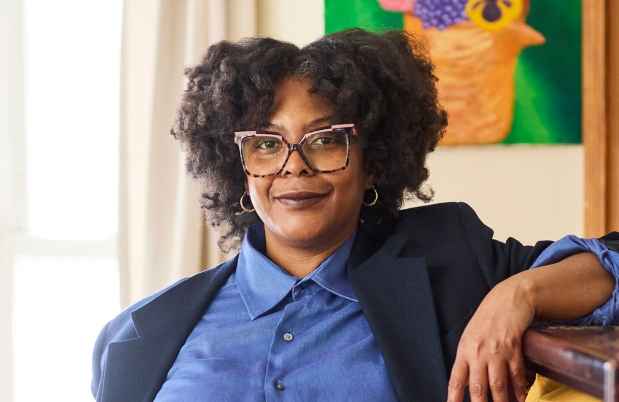
A Story of Struggle and Strength: Meet Charles
Available with English captions and subtitles in Spanish.
Before he was in first grade, Charles had smoked pot. He grew up in poverty. The little attention he had from family members came in the form of abuse.
As Charles got older, he continued to numb the pain from his past with alcohol and other drugs. Eventually, he went to see a therapist, got a diagnosis of bipolar disorder and substance use disorder, and started treatment.
Now a cancer researcher, Charles provides support to others with mental health disorders through poetry and an active blog.
“It Does Get Better”
“My story starts at about the age of five years old with my first drug, which was marijuana, and then my first drink was at nine years old,” shares Charles.
“My mother was unable to take care of my sister and me. She was high on heroin and crack cocaine. So, I ran the streets of Brockton, meaning that I joined a local gang in Brockton, Massachusetts, and that was my family. I didn’t attend school, I didn’t know how to read or write.”
The circumstances of his early life pushed him into substance misuse.
“From nine to about 17, 18 years old, I moved in with my aunt. In that household, I was mentally, physically, and sexually abused. I lived with two other cousins, so I was molested by one of my cousins. And then to cope with that was drinking and drugging.”
Charles managed to graduate high school and then enrolled at a local university. He masked pained with drugs and alcohol use, and also misused substances socially.
“I was interacting with friends and family and coming out of my shell. Nonstop partying. I got married at age 30 years old. My first year of my marriage was a blackout. I don’t remember my first year at all.”
Finally, there was a moment of self-realization.
“I literally was at a bar in 2016 and I’m just staring at the wall going, ‘Charles, like, what are you doing with your life? This is not how you want to continue moving on with your life.’ My body was telling me ‘I’m sick and tired of being sick and tired.’ I was tired of lying, stealing, cheating, manipulating, and getting what I wanted.”
Charles checked himself into a substance detox program and began a long path toward healing.
“The mental health issues didn’t come about until I was one year sober. I was feeling hopeless after that one year because I just felt like ‘I did it, I completed a year. Now what?’ I was stuck in a depressive state and I wasn’t self-medicating anymore. I was going to commit suicide.”
“A week later, my ex-wife told me she was pregnant with our daughter, and for me, I took that as a special meaning to my heart because a week ago I was going to kill myself, a week after I’m finding out having a baby girl. I knew I needed to get professional help to actually give me that diagnosis, and then that’s when they pinpointed what my diagnosis is, which is bipolar disorder II.”
It’s important to Charles to take an active role in his mental wellness. It was his idea to start tracking his moods on a calendar, which also assists with regulating his medications.
“When I do my chart daily, it helps with my basic mood. Am I happy? Am I sad? Am I mad? Angry? Whatever it is, whatever mood that I’m feeling on that day, can I change it the next day?”
With substance use behind him, and his bipolar disorder managed, he is living his best life.
“I’ve been clean and sober for eight and a half years. I have a life that’s full of happiness. I’m remarried. I have two beautiful children. I work as a scientist for cancer research. I live one day at a time, and that keeps me away from my drink, my drugs, and focusing on my mental health disorder and my well-being.”
Charles is proud to be a mental health advocate. He blogs regularly on social media hoping that others will identify with his experiences and see themselves in what he has gone through and overcome.
“I’m helping people that need help. I believe I can be the outlet to help them, give them hope, give them reason, give them purpose.”
“I ended up being like a vessel or a spokesperson of getting the message out there of not to be afraid, not to have the stigma of mental health. If I can do it, you can do it. I was always an outgoing person and someone that was vocal, so now if I’m on the opposite end of my addictions and my mental health struggles, now I can spread that hope and message that it does get better.”
Read more of Charles’ story