Subrina
Subrina
My hope is that one day we live in a world without stigma
Don’t be scared of judgment, don’t be afraid of the taboos, and always remember you are never alone.
For a long time, Subrina did not talk about her mental health. She comes from a close-knit South Asian family, and mental health was a forbidden topic in her culture.
I grew up in a traditional home where we didn’t speak of our feelings, let alone mental health.
It was so taboo in my culture that, when I was diagnosed, I was scared of the judgment to come. I kept my condition a secret for years.
Subrina was diagnosed with bipolar disorder when she was 16 years old. Since her diagnosis, she has been hospitalized seven times and taken part in several partial hospitalization and intensive outpatient programs. Her first hospitalization came after a suicide attempt.
In July of 2012, I attempted suicide. After being rushed to the ER, I was admitted to the hospital’s psych ward.
I had never been hospitalized before and was extremely scared of staying as an inpatient. The next day, I was released. I left the hospital more suicidal than ever.
I might have been scared to admit it, but I really needed their help. Each time since, I have been hospitalized for suicidal ideations. And while these ideations have not gone away, I am now able to accept the help I need.
“I want to share with others that having a mental health condition does not make you weak, rather it makes you stronger.”
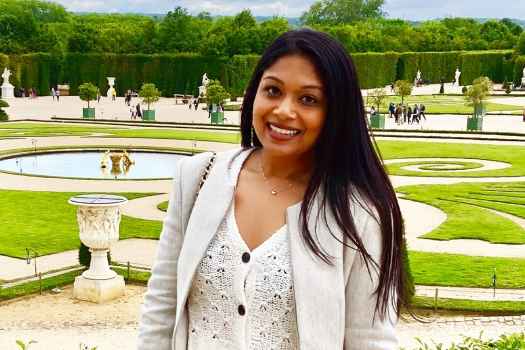
To address her bipolar disorder, Subrina needed to overcome the mental health stigma imposed by her culture. She also needed to embrace a treatment program.
Subrina did both, and for 15 years, she has relied on a combination of therapy and medication to keep her condition under control.
Treatment has changed my life. I say it continuously: My medication makes me the best version of myself. It makes me strong and resilient, and with it, I know I am able to handle any episode thrown my way.
As she has dedicated herself to treatment, Subrina has dedicated herself to advocacy. She blogs regularly about mental health and is willing to speak to one and all about mental health and stigma.
Stigma, to me, is not understanding mental health. Most biases stem from misunderstanding.
For years, stigma stood in the way of me accepting myself and my disorder. I viewed myself as inferior and defective only because society and its stigma told me to do so.
Today, I challenge stigma through conversation, and I know that by sharing our stories and igniting these conversations we are working towards eradicating the stigma.
Subrina has come a long way. At one time, stigma made her hide her condition from others. Today, she is open about her mental health, and she hopes her honesty will inspire others.
Now I embrace it and consider it my greatest blessing. I want to share with others that having a mental health condition does not make you weak, rather it makes you stronger.
My hope is that one day we live in a world without stigma and view mental health for exactly what it is: the same as physical health.