Caroline
Caroline
Surround yourself with people who make you feel seen
At the age of 15, Caroline stopped feeling “normal.” Anxiety and social anxiety had been a part of her life growing up, and while she had been quietly managing, it was becoming overwhelming.
Right before her sophomore year of high school, she fell into a deep depression that lasted a few months.
My school was academically rigorous. I felt like everyone else had their lives figured out and I didn’t.
I had high standards, so even though I felt awful, I did all my work and got good grades.
It was important to Caroline that her parents did not worry. Her grandmother had been diagnosed with cancer, and she didn’t want to place added stress on the family. She was never one to complain, so she fought her battle in silence.
I knew my family would love me no matter what, but I couldn’t accept that something might be wrong with me, so I tried to ignore it.
But as time went on, the anxiety became too much—Caroline began restricting food. She could no longer hide.
I felt like I didn’t have a purpose—my life was out of control.
The one thing I could control was what I ate. It filled that void.
I wore bulky clothes, so my friends didn’t know, but my parents eventually noticed something was wrong.

Caroline’s parents located an anorexia treatment program in San Diego, on the opposite coast from her home in Massachusetts. After being hospitalized, she spent three months in that program while her family rented a house nearby to support her recovery.
Leading up to that, things were really bad. There was no way to escape the voices in my head.
When I got to San Diego, it was a relief for both me and my parents. There were professionals there who understood.
Caroline resumed school and found her courses to be difficult and competitive. She was able to reduce her course load, but only for a short time. While she had friends, she still didn’t feel supported.
When I got home from school or after therapy, I would spiral. My mind would race, and I’d have dark, intrusive thoughts and I couldn’t stop. I started self-harming and ended up attempting suicide.
Caroline was admitted to an inpatient unit at McLean, continuing to struggle with self-harm, dissociative episodes, and flashbacks.
Thankfully, she connected with staff and met another patient who would become her best friend.
During her stay, she engaged in art therapy and began to paint. Once transferred to another McLean residential program called 3East, she learned dialectical behavior therapy (DBT), which gave her tools to help manage daily life.
“For a long time, I wanted to stay sick because I thought that was the only time people cared. Now I know that couldn’t be farther from the truth.”
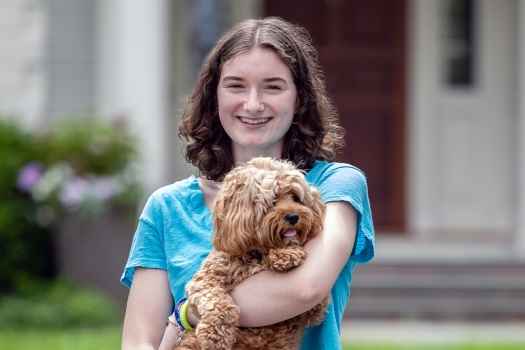
Over her 10-week stay, she went on outings and experienced the real world again. Through group and individual therapy, Caroline learned skills to overcome her mental health challenges.
It was completely life-changing. The people I met and the skills I learned there saved my life.
I met my favorite people there who taught me to love myself again, and for that, I could never repay them.
Caroline currently sees a psychiatrist and a therapist regularly. She is repeating her junior year, this time at a new high school that is less stressful and a better fit. She has made supportive friends who help make day-to-day life easier.
Before, I didn’t think I deserved to feel good.
While I still struggle some days, I feel content most of the time. I have a social life with fulfilling friendships. It’s a new balance I’ve needed for a while. I have truly seen the light at the end of the tunnel.
For a long time, I wanted to stay sick because I thought that was the only time people cared. Now I know that couldn’t be farther from the truth. You deserve to be loved and cared for no matter what, and you don’t need to be at your lowest to receive help.
Asking for and accepting help is a sign of strength and one that should never be overlooked.