Andrea
Andrea
Sharing my story can be very powerful
When I was 14 years old, I went from being a happy child to wanting to die within a few weeks. I stopped eating and was crying all the time. My mom took me to my pediatrician, who referred me to a psychiatrist.
Andrea is grateful for how quickly she received a diagnosis and treatment for what turned out to be bipolar disorder. However, since she was so young at the time, she was confused. She didn’t understand the terms her medical providers used, or why she had to take medication.
I do wish there had been more education around what was happening so I knew what was going on. Because all I knew was that I was feeling really awful.
With treatment, Andrea was able to function through her teenage years. Though, with the power of hindsight, she now recognizes that she experienced symptoms of ongoing mood elevation during that time. Still, she graduated high school and college at the top of her class.
By the time she was 23, however, her symptoms became harder to manage. She tried many different medications with little success and severe side effects. It wasn’t until a decade later that she found effective treatment through a new medication regimen that included ketamine.
Grateful to be feeling better and for the help she received, Andrea wanted to give back to her community.
She started running a peer support group, first on her own, and later with the Depression and Bipolar Support Alliance (DBSA). Sensing there was a “next level” where she could contribute, she went to graduate school to study psychology.
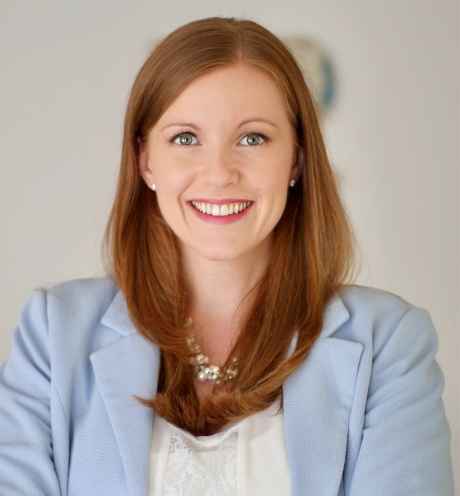
Now, as a psychotherapist who specializes in treating bipolar disorder, Andrea provides the perspective of her own lived experience. In addition to treating patients who have bipolar disorder, Andrea runs an educational social media account, writes about the condition for academic journals and the press, and has speaking engagements with mental health organizations.
As part of her work, Andrea developed an 8-week group program for people who experience self-stigma from bipolar disorder. She’s also written an individual self-guided workbook on self-stigma. She points out that while she has experienced stigma, she has never had the internalized negative beliefs of self-stigma. From the beginning, she accepted bipolar disorder as an aspect of her identity.
I was diagnosed so young that I never really had an adult concept or understanding of myself without bipolar. Bipolar disorder was just something I had, like having red hair.
Many of Andrea’s patients make harsh value judgments about themselves for having the condition, however. Andrea explains how negative beliefs, combined with a mood episode, can spiral into a feedback loop.
People have self-stigma and then they have worse symptoms. They feel worse about their symptoms because they have worse self-stigma.
In helping people with this issue, and other aspects of bipolar disorder, Andrea’s lived experience is a driving force.
That’s my unicorn superpower: being someone who lives with this condition, but who can also teach you about it and help you cope with it.
She wishes she’d had the benefit of bipolar-specific therapy when she was younger. These days, she shares her own experience with her patients, which can be very healing.
Done right, sharing pieces of my story with my patients is very powerful. When they are struggling to put words to their experiences, if they know that I get it, they feel much less alone—and that is beautiful. That’s one of my favorite things.