Adam
Adam
You can be a macho guy and still talk about mental health
As far back as he can remember, Adam knew he wanted to be a police officer. As a child, he used to race to the window every time a siren passed his family’s home in Wisconsin.
After securing a degree in criminal justice and serving a five-year stint in the U.S. Army as a military policeman, his lifelong dream of serving his hometown was fully realized.
On a Friday afternoon in 2016, Adam responded to what seemed like a routine call, someone refusing to leave a Walmart. However, within minutes, he found himself having shot a woman wielding a hatchet. He learned she had died the following day, leaving behind a young daughter.
When I pulled the trigger, that changed everything. That moment changed my life.
Adam returned to work following a brief investigation, and for the next five years he told almost no one how he felt. He was not doing well. He began drinking heavily and often, including before social events or when doing daily activities like putting gas in the car.
I just didn’t care, and alcohol was an easy fix for me to numb the pain, to escape the reality of killing somebody.
He tried marijuana for the first time. He injured himself deliberately to avoid going to work. He held his own service weapon to his head more than a dozen times, unloaded, just to hear the click.
I felt like nobody understood. I felt like nobody cared about me. Nobody supported me. Like I was just a burden to everybody.
It’s hard for me to even say that, because, deep down, I knew I had family and friends that loved me.
“I felt like nobody understood. I felt like nobody cared about me. Nobody supported me. Like I was just a burden to everybody. It’s hard for me to even say that, because, deep down, I knew I had family and friends that loved me.”
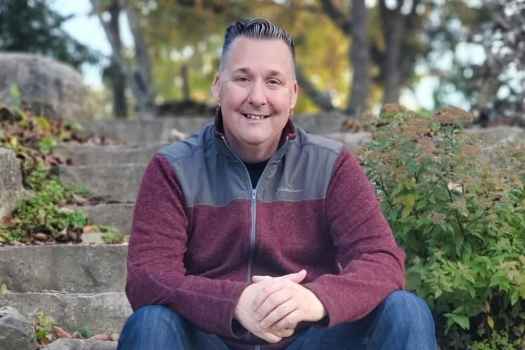
What finally broke through his defenses was a coincidence of timing. Assigned to New Year’s Eve patrol in 2021, he sat in his squad car at 11AM on a Friday, the same day, same hour as the shooting, and something in him gave way. He walked into his chief’s office and told him he needed help.
The diagnoses that followed—major depressive disorder, PTSD, acute stress with dissociative features—arrived in a nine-page report. He read it and cried. Not because it devastated him, but because it explained him.
I started crying, and I’m reading this thing, and I’m like, this is all me. I wouldn’t say it was a happy cry, but inside that evaluation were answers.
Like, okay, how do I get better now? What do I have to do to get better and change?
He did the work: eye movement desensitization and reprocessing (EMDR) therapy, dialectical behavior therapy (DBT), traditional talk therapy, and medication. Slowly, the architecture of his interior life was rebuilt.
My first reaction was, ‘I have to fight this, and I have to hide it from everyone.’ And I believe that was because of the stigma associated with mental health.
Eventually, Adam stopped hiding, and he was terminated for his transparency surrounding his mental health struggles by the department he had given fourteen years to. He moved into his sister’s basement with almost nothing.
She found him a therapist, one he still sees every Monday afternoon. A few years ago, he was hired by a new department, where he has since been promoted to captain.
And because I did the work, I got back into law enforcement, and I’m better.
I’m a better father, I’m a better person, police officer, man, you name it, because of everything I went through. I finally got healthy, and I’m proud of that resilience.
Now Adam tells his story everywhere he can, at firehouses, precincts, and community centers. He tells it to people in Africa, Europe, and Australia. He tells his story because he knows how it feels to struggle in silence.
By sharing the details of his own mental health journey, Adam hopes to empower others to find their voices and to reach out for help when in need.
You can be a badass, a macho guy, and still talk about your mental health.