Kelly
Kelly
Find the silver lining
Kelly grew up in a small town in Iowa in the 1970s.
At the time, people thought that mental health disorders didn’t exist—you just needed more discipline.
Kelly had episodes of rage starting from when she was around 7 or 8 years old.
I said to myself, ‘Normal people don’t do this.’ I thought I was a horrible person with terrible anger management issues.
Kelly grew up competing with Arabian show horses. After she attended art school, she decided to go into professional show horse training. She competed across the United States and Canada.
I remember sitting at a competition and a friend saying to me, ‘You just won 16 regional championships, you should be on top of the world.’ However, I thought, ‘Well, if this is as good as it gets, then what’s the point?’
Kelly noticed that she wasn’t feeling the joy that typically accompanies a success like winning multiple championships. Instead, she just felt numb.
Shortly after this, Kelly decided to seek treatment, where she was diagnosed with bipolar disorder. Her new therapist told her that they could help her, and she was prescribed medication for her episodes. Kelly felt a flood of relief knowing that there was something that could help.
However, after this diagnosis, Kelly started self-medicating with alcohol.
I self-medicated myself right into rehab.
Kelly considers this trip to rehab to be when she truly started to recover.
After rehab, Kelly continued to compete until she retired in 2014.
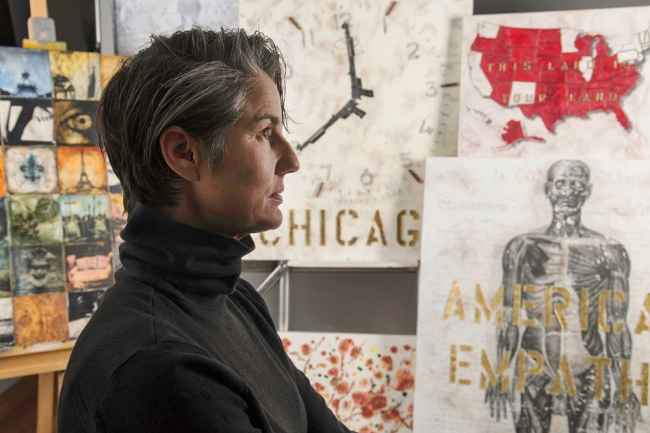
After retiring, Kelly pursued her passion for art. She had her first exhibit in 2016. She then submitted a piece to a gallery that was part of the Ryan Licht Sang Bipolar Foundation. Her piece was selected, and during the exhibition, it was hanging next to a piece by Dale Chihuly, a famous glass artist.
The funniest thing about this experience was that I opened up about my diagnosis during my interview with the Chicago Tribune.
Kelly’s face was on the front page of the Tribune with the headline, “Bipolar Is Not a Death Sentence.” This was the first time that many people learned about Kelly’s diagnosis, and she received a lot of support from those close to her.
Kelly then went on to debut a solo art show about living with bipolar disorder. The gallery displaying her show was doing a call for art by people who had been diagnosed with a mental health condition. They received amazing work, but most of it was under pseudonyms because people were too afraid to have their names associated with their diagnosis.
It is so upsetting that people have to walk around with shame around something that they can’t control.
The brain is a part of the body—it gets ill like all other parts of the body, and it’s manageable.
Kelly is currently working on a new project in which she portrays the eyes of successful people who have been diagnosed with bipolar disorder alongside a list of their accomplishments. The end goal is to have between 30 and 40 different disorders portrayed.
“Instead of you looking at us, we’re going to be looking at you to challenge what you think of us.”
Kelly wants to change the image that comes to mind when people think of this disorder. She wants to change others’ perceptions of the diagnosis and show those who share her diagnosis that they can still live the life they want to live.
I pretty much dedicate my life to helping people find the silver lining in their diagnosis.
This is one of the important things about being older with bipolar. When you’re young and you hit rough spots, it feels earth-shattering. When you’re older, you know exactly what it is.
I have two rules each day: I have to wash the dishes and I have to make my bed. Once I do that, I’m good. You know it will pass, and you don’t get that anxiety that will snowball into a worse episode.
I want those newly diagnosed to know that the bad days will pass, if you give yourself a break and a little time.